The exploration of the relationship between the outer and the inner, and the incorporation of the play of light directly into objects, can be found in the work of Čestmír Suška as early as the beginning of the 1990s. It was the groundbreaking cycle of sculptures Vnitřní světlo (Inner Light) in which the artist draws our attention through tiny windows and openings into archetypal dwellings of fired clay, so that with bated breath we peer into their illuminated and often surprisingly compartmentalised inner worlds. In later stages of his work the artist does not abandon the theme of inner space, and most of all in working with wood new possibilities present themselves. Through simplification he arrives at harmoniously chiselled shapes that honour the natural material and let it resonate in its plain beauty. He also works with ancient trunks and stumps, where he makes use of openings and then himself further cuts through their shell, thinning it to the very limit.
The overlap he longs to realise, and which he resolves to undertake over several years, he finds after 2002 in glass – in its light-permeability and in its other optical properties. Shapes at first glance identical to the wooden sculptures suddenly gain new qualities when cast into a transparent material. They draw us in, as if beneath the surface, to discover the inner world, the harmonious beauty of perfect shapes and the full penetration of rays through the pure crystal mass. By surrendering to the transparency of glass, the artist suddenly lets light into the sculpture at full intensity, and with it the entire outer world.


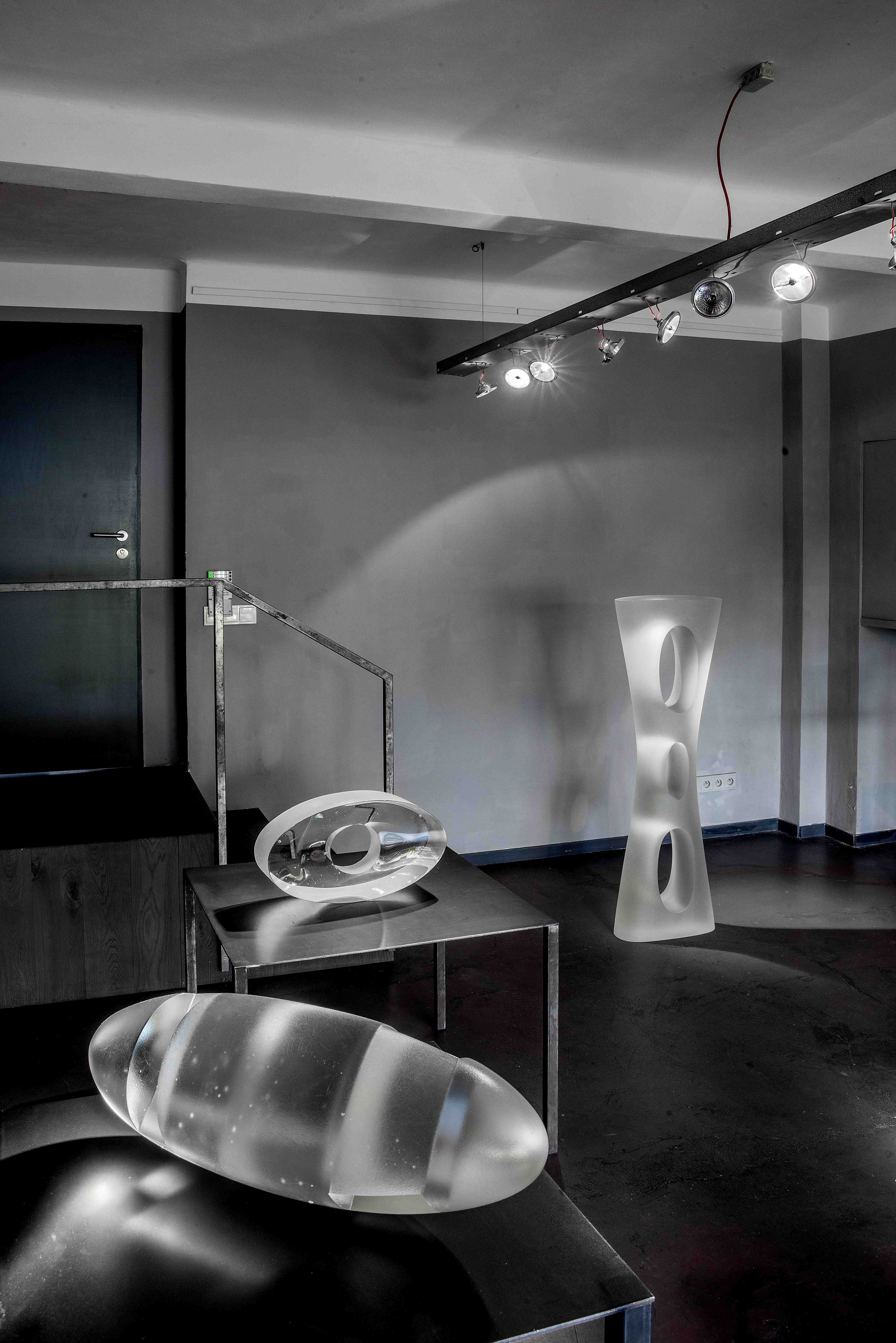


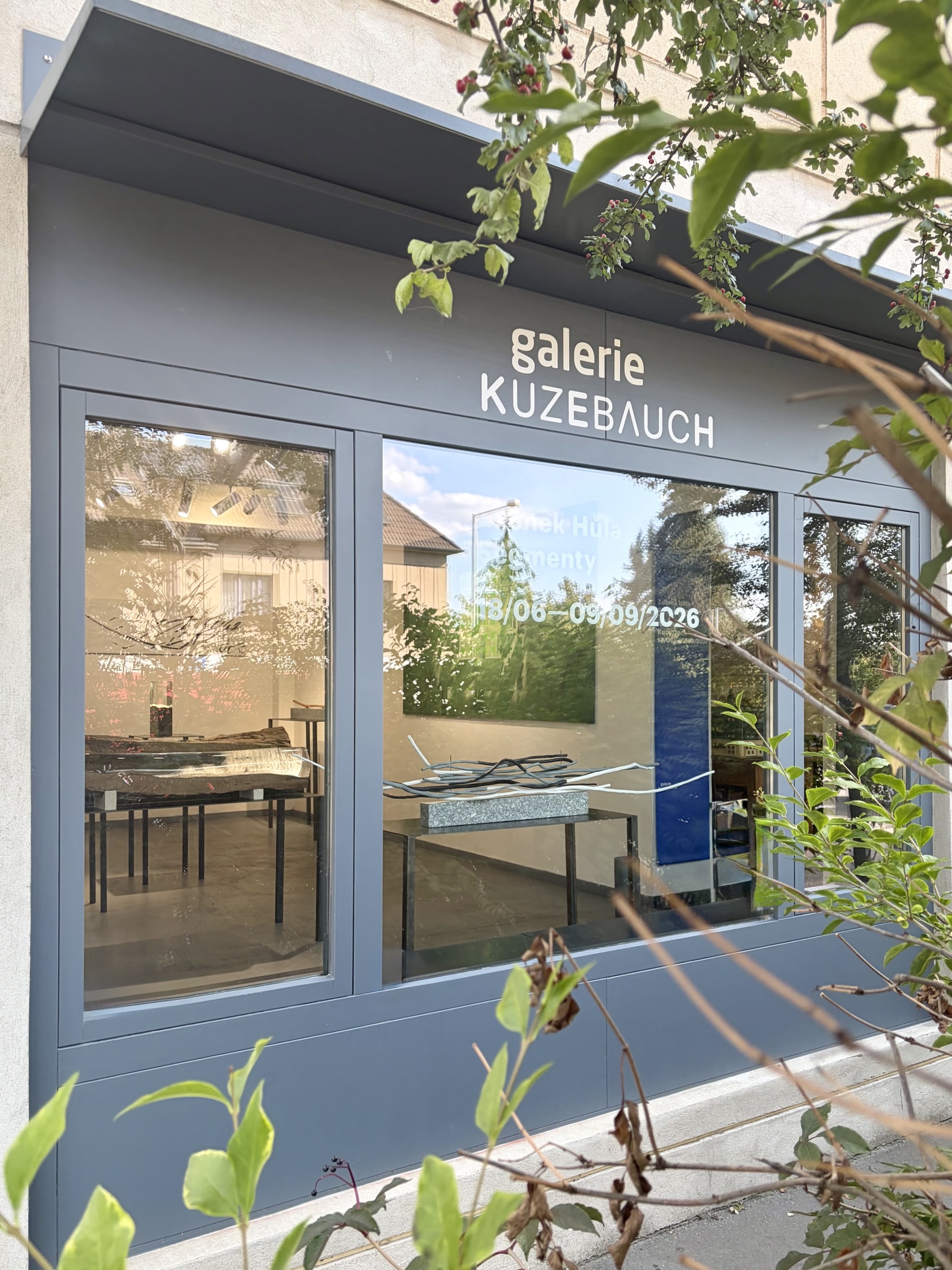
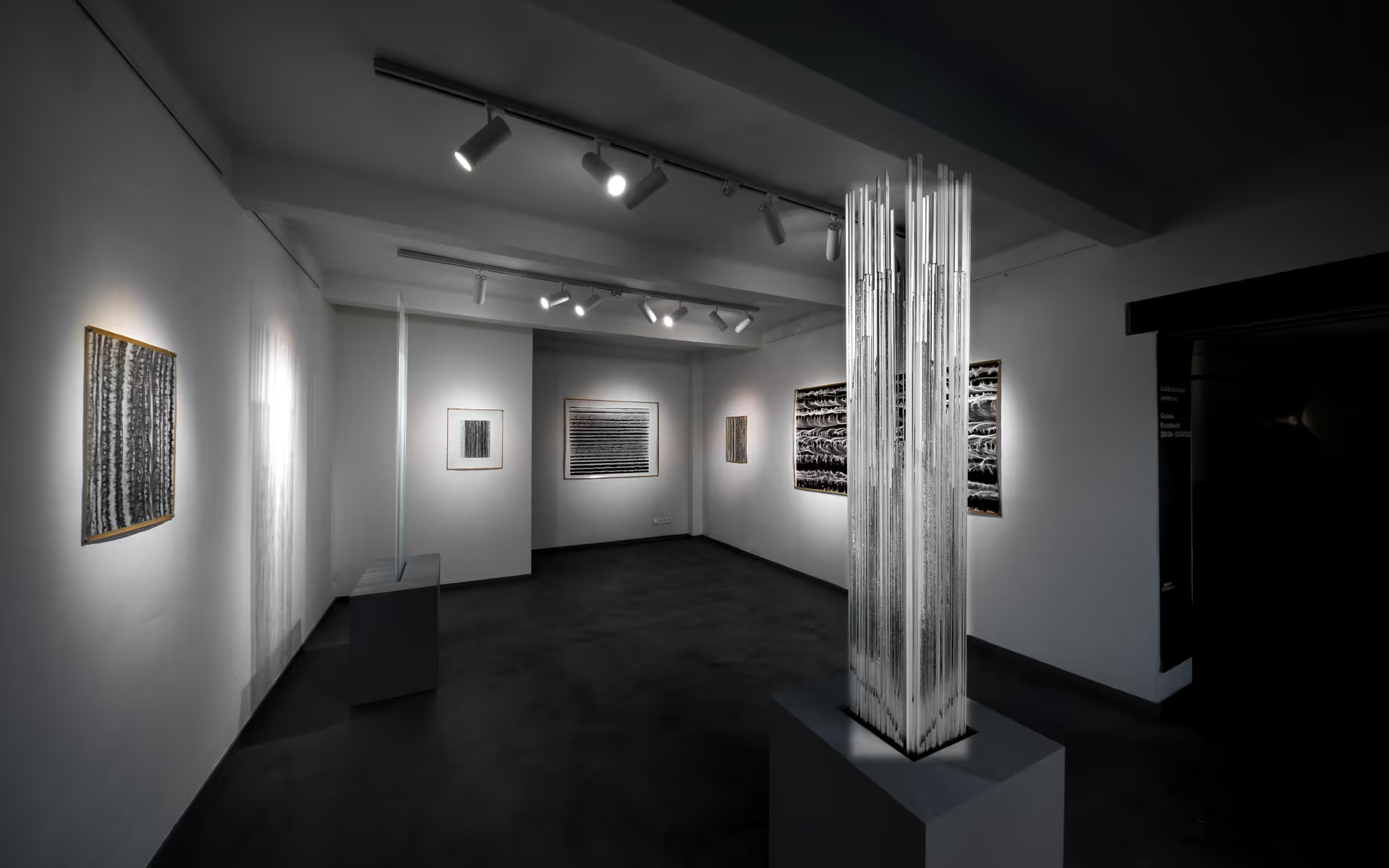
The set of sculptures exhibited at Galerie Kuzebauch was created mostly in 2002–2006 in the Pelechov glass studio of Zdeněk Lhotský. One of the oldest models belongs to Mask , today an iconic portrait tribute by the artist to the art of sculpture itself. Among others, let us mention Starfish , with its prototype in fired clay, representing the theme of seeking the opposite of full and empty, or Eight , at once trivial and mysterious, which moves us all the way to the symbolism of infinity. To see a comprehensive collection of glass sculptures occupying a special position in the work of sculptor Čestmír Suška is certainly a rare opportunity.
The exhibition Light in Sculpture continues at the Lemberk Granary with an installation of two steel interactive sculptures by Čestmír Suška. With them, the company Happy Materials launches here, in the summer of 2021, the inaugural season of its activity, still during the initial process of repairing the early-Baroque granary.
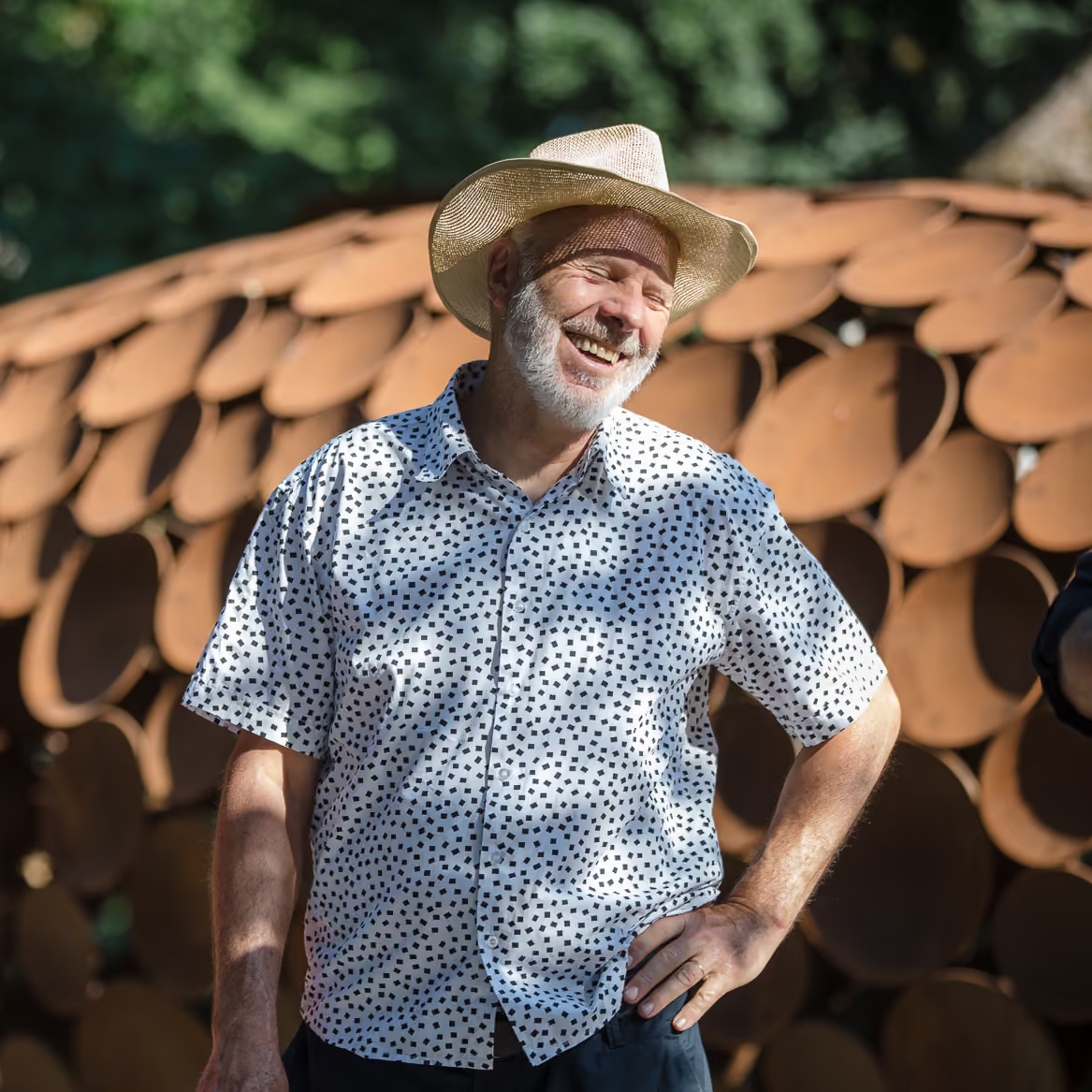
The musical sculpture Chalice , made of metal sheets, will be able to sound during acoustic performances, and the nine-metre ellipsoidal structure of joined steel discs, also called Loaf , will serve all visitors to Lemberk as a space for meditation. It belongs among the giant objects, such as Suška's lookout towers or gazebos that already stand on the border of architecture. Their charm lies in the combination of aesthetic and functional qualities, and in the surprising experience that arrives upon entering their inner space through a small door. Such a physical entry into a work of art is unique in the history of art, and a stay inside Čestmír Suška's sculptures is further aesthetically heightened for us by the vistas and the light falling through the artist's exceptional rasters. Simona Martínková curator of the exhibition