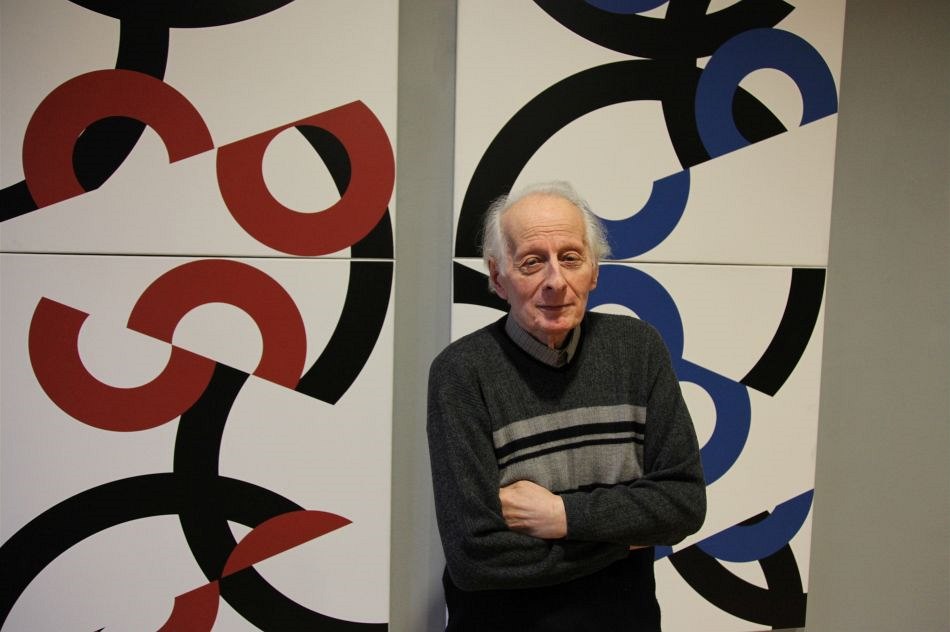
Jan Kubíček was born in Kolín in 1927. He graduated from the School of Applied Arts and the Academy of Performing Arts, majoring in stage design. He always belonged to the most radical representatives of the non-depictive constructive-concrete art. In his artistic expression he very soon came to the pure order of the constructive geometric compositions. Jan Kubíček is also known for his photographs, illustrations and graphic art, for which he received the 1999 Vladimír Boudník Award.
Kubíček was a step ahead even in the artistic circles of his time. Due to the restrictions of the totalitarian regime, his work is only being gradually appreciated in the recent two decades. In April 2014, the Prague Municipal Gallery organises a retrospective exhibition, which will, for the first time ever, show his lifetime art in full.
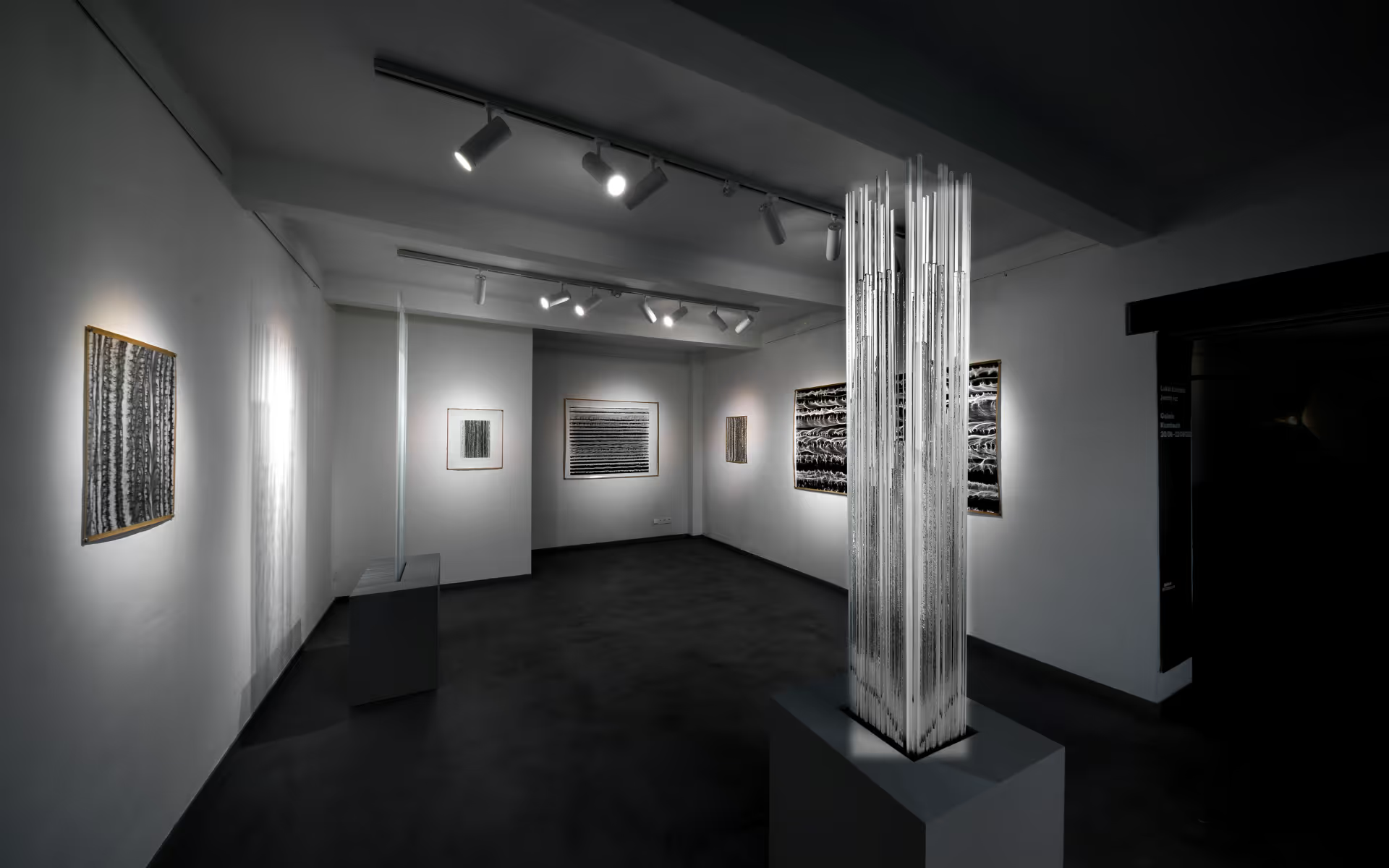
Jan Kubíček is one of a few Czech artists engaged in conceptual geometry. Since the 1960´s, his art has been deeply immersed in constructivist principles and tendencies. His masterpieces include, apart from paintings and his graphic art, constructivist objects made from plastic and metal. He soon realised that the third dimension would make his constructions more complex and complete. Perspex seemed to be the best material to meet his expectations. Layering of sheets in space allowed for seeing through the objects and multiple layers accentuated the colours giving them different tones than those available from standard painting colour mixing. “The essence of my geometric art is simplicity and comprehensiveness,” claimed Kubíček. “When I transform my sketches to artefacts made from wood, plastic or other material, some elements of the construction will always remain hidden from the curious eye of the viewer. Perspex, on the other hand, makes the construction transparent and legible. It discloses details otherwise hidden due to the nature of other materials.”
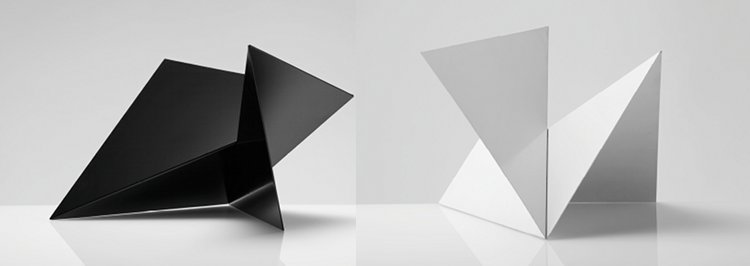
Jan Kubíček also used PVC, a less elegant, but cheaper and more accessible alternative to Perspex. Since PVC is non-transparent and matt, it offers itself for other construction solutions. Apart from some smaller metal artefacts, Jan Kubíček designed a collection of rods and prisms, presented in the Gallery of Václav Špála in 1969 as a comprehensive and radically minimalist installation. Artistic objects form a unique part of Kubíček’s work – limited in number, but very interesting in the context of his other artwork. Most of them originate from mid to late 1960´ and have never been comprehensively exhibited or captured in publications.
Jan Kubíček was aware of the possibilities offered by plastic design. Unfortunately, he had neither space nor money to make large plastic artefacts. Instead, he designed them as experiments or samples. “Most of them ended up in German collections, some pieces are in the ownership of collectors and museums in our country, and three objects fell victim to one wild party in my old studio,” the artist confessed in an interview.
Although different materials offered numerous possibilities for alternative expression, Jan Kubíček returned to his “old” media, especially painting, which he kept further developing and improving. His objects thus became a closed collection of fruit borne by one creative period, which, instead of standing out of the rest of his work, complements and deepens his mastery.
Kubíček used to say: “Most objects just remained sketches on paper but they deserved placement in architecture.” And he added: “One could then retrospectively show at least some of my works from the past years. They would disclose their spatial form and convey the ever vital geometric and constructivist thoughts and values.” Unfortunately, Jan Kubíček did not live to such retrospective.
Umělec používal i levnější a dostupnější PVC, které je ovšem méně elegantní variantou. Vzhledem k tomu, že je neprůsvitné a matné, nabízí z konstrukčního hlediska zase jiná řešení. Z kovu navrhl (kromě pár menších objektů) především sérií tyčí a hranolů, z nichž vytvořil v roce 1969 v Galerii Václava Špály jednu soubornou radikálně minimalistickou instalaci. Objekty jsou svébytnou částí jeho díla: malou rozsahem, avšak velmi zajímavou v kontextu ostatní tvorby. Téměř všechny vznikly mezi polovinou a koncem šedesátých let a nebyly nikdy souborně vystaveny ani zachyceny v publikacích.
Jan Kubíček si byl vědom, jaké možnosti plastické ztvárnění nabízí. Neměl však prostorové ani finanční podmínky k výrobě objektů ve větším měřítku, a tak je realizoval spíše jako experimenty, dílčí ukázky. „Větší část skončila ve sbírkách v Německu, několik kusů mají sběratelé či muzea u nás a tři se rozbily během jednoho bouřlivého večírku v mém starém ateliéru,“ přiznal před časem
v jednom rozhovoru.
Přestože různé materiály nabízely celou škálu dalších možností vyjádření, Jan Kubíček se vrátil k dřívějším médiím, především k malbě, kterou pak dále rozvíjel a zdokonaloval. Z objektů se tak stal uzavřený výsledek jednoho tvůrčího období, jež však z umělcovy tvorby nevybočuje, naopak ji doplňuje a prohlubuje. „Značná část objektů zůstala jen na papíře a přitom by jim slušelo umístění do architektury,“ říkával. „Dala by se tak retrospektivně realizovat část mých prací z minulých let. Ukázaly by tím také svoji prostorovou formu, a navíc stále obecně platné geometricko-konstruktivistické myšlenky.“ Toho se bohužel za svého života nedočkal.
Kateřina Zvelebilová