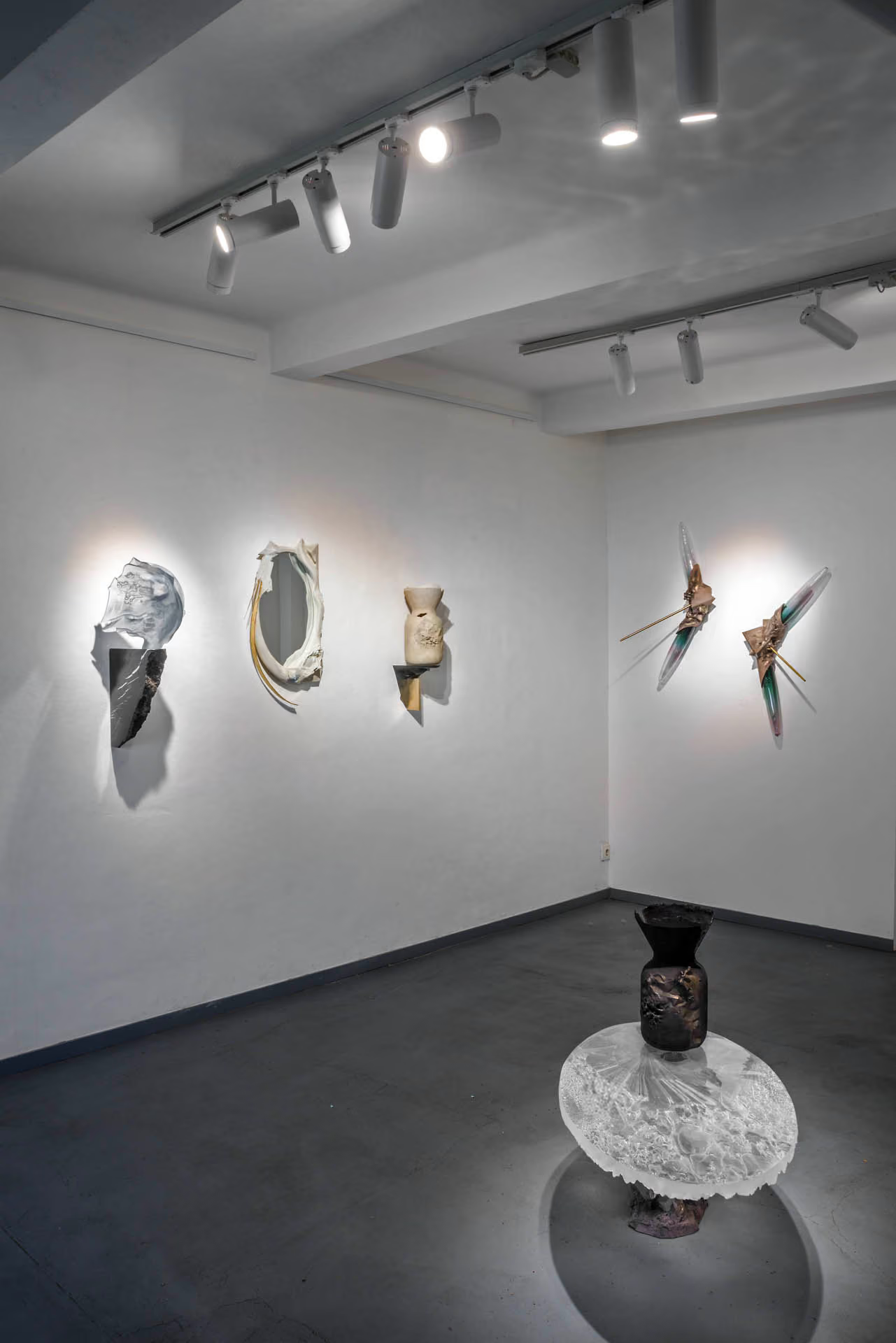
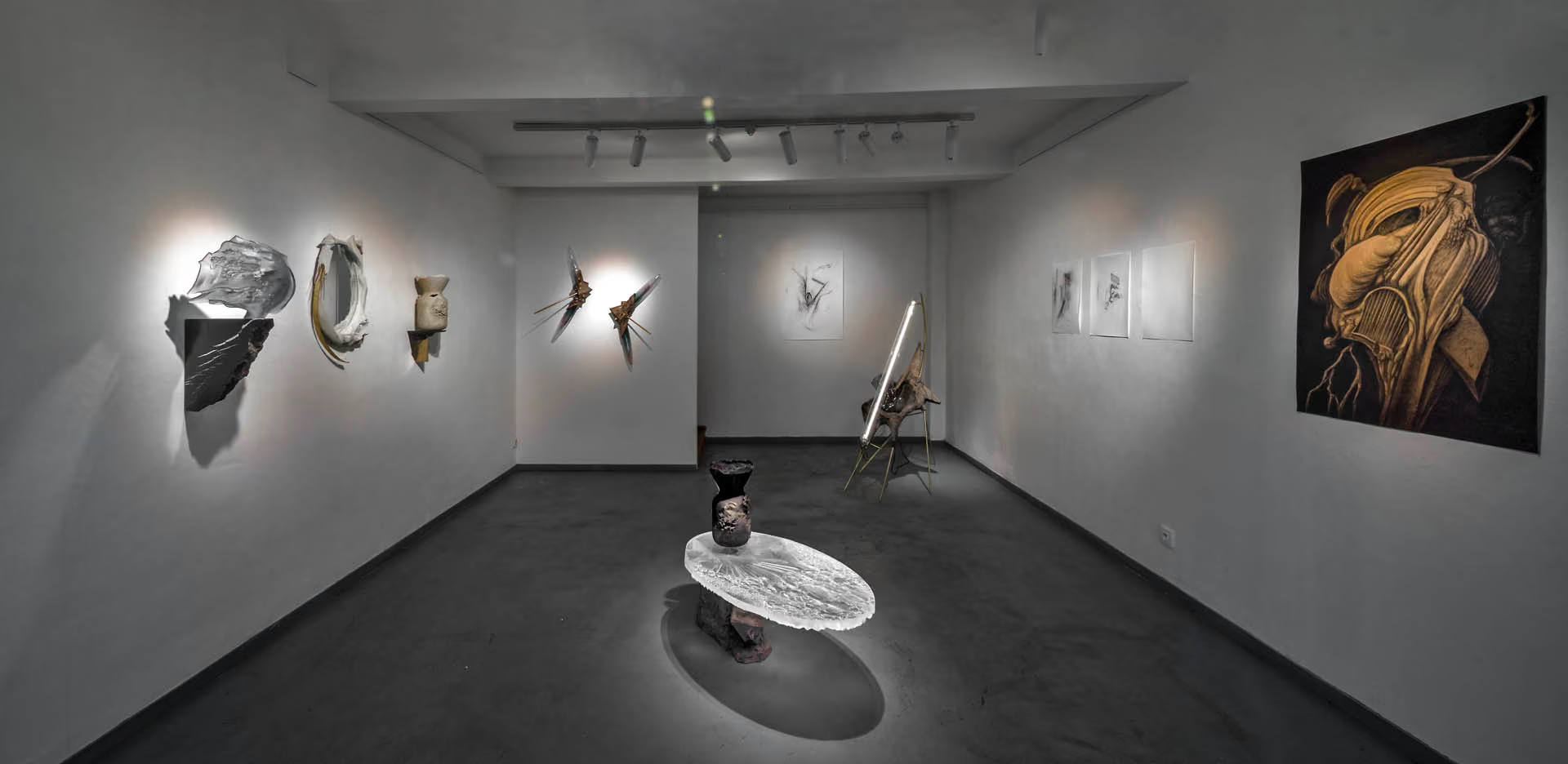
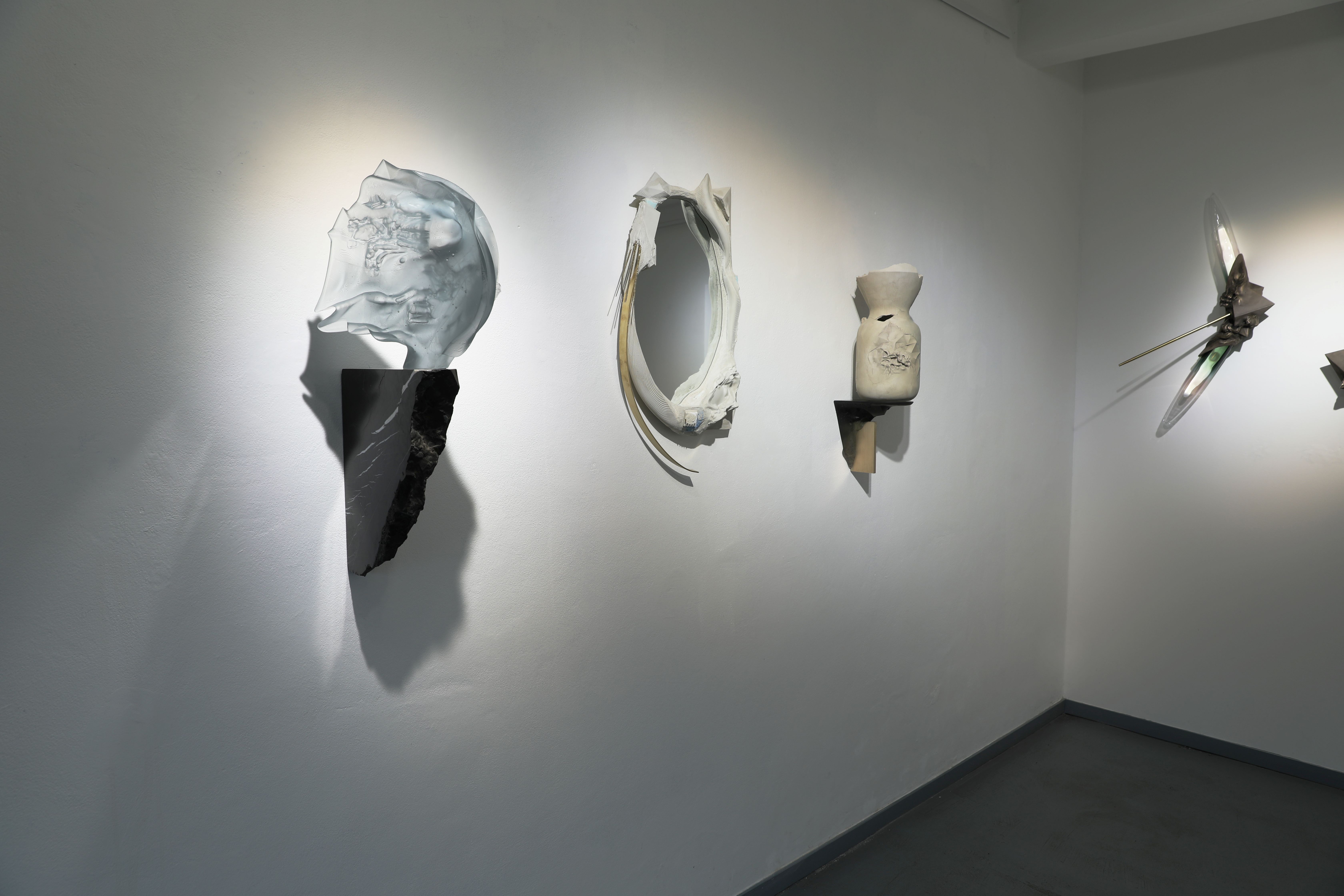
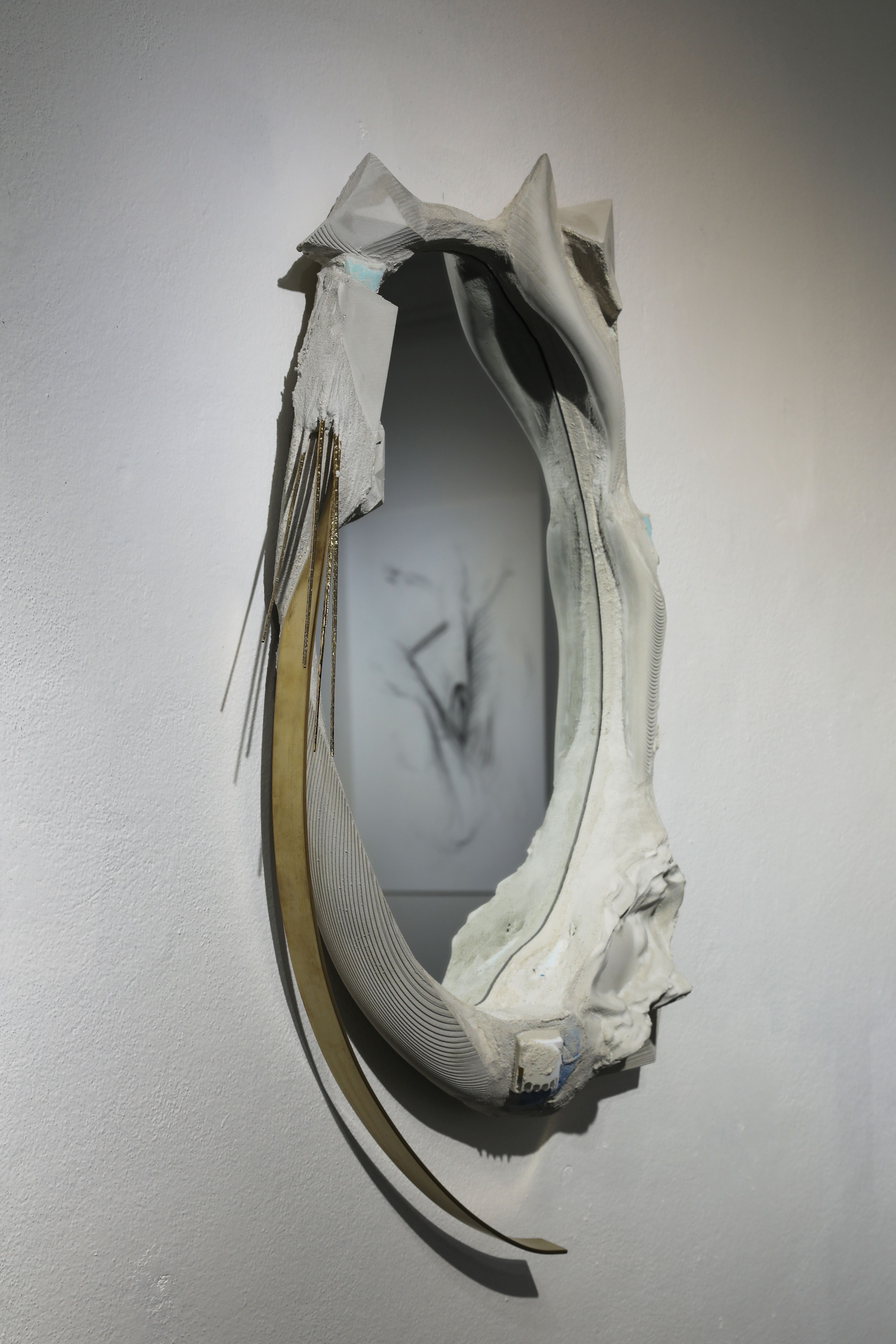
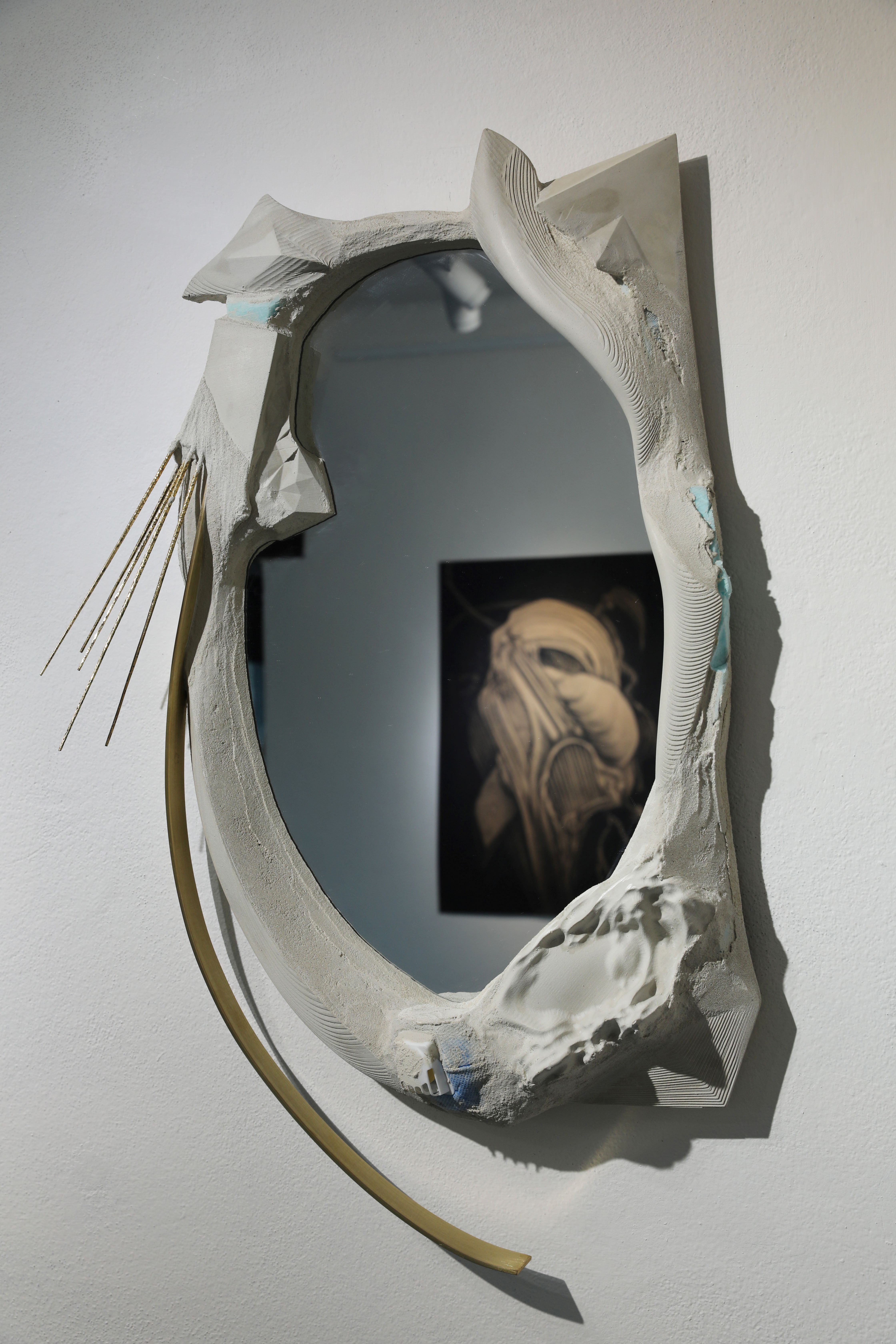
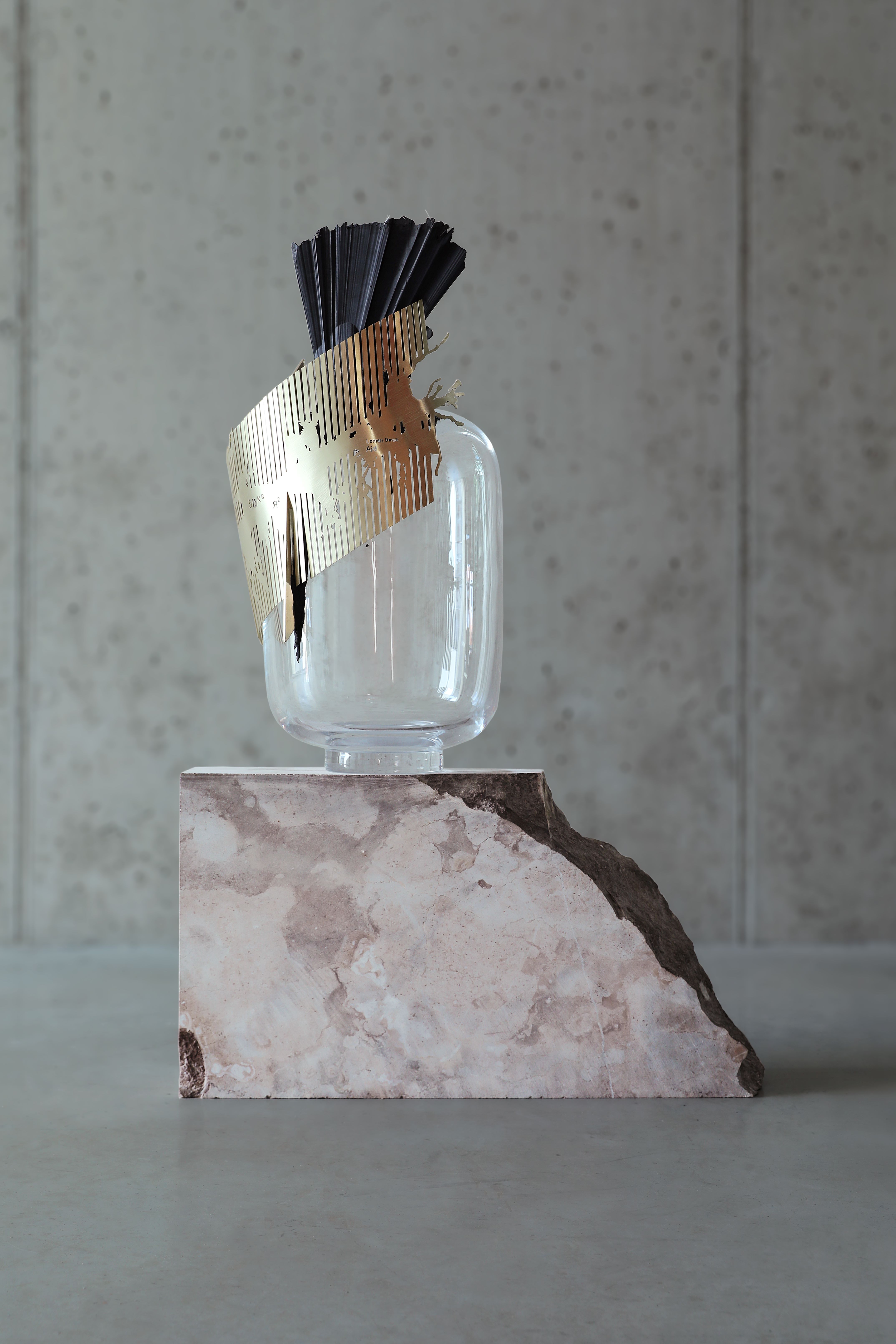
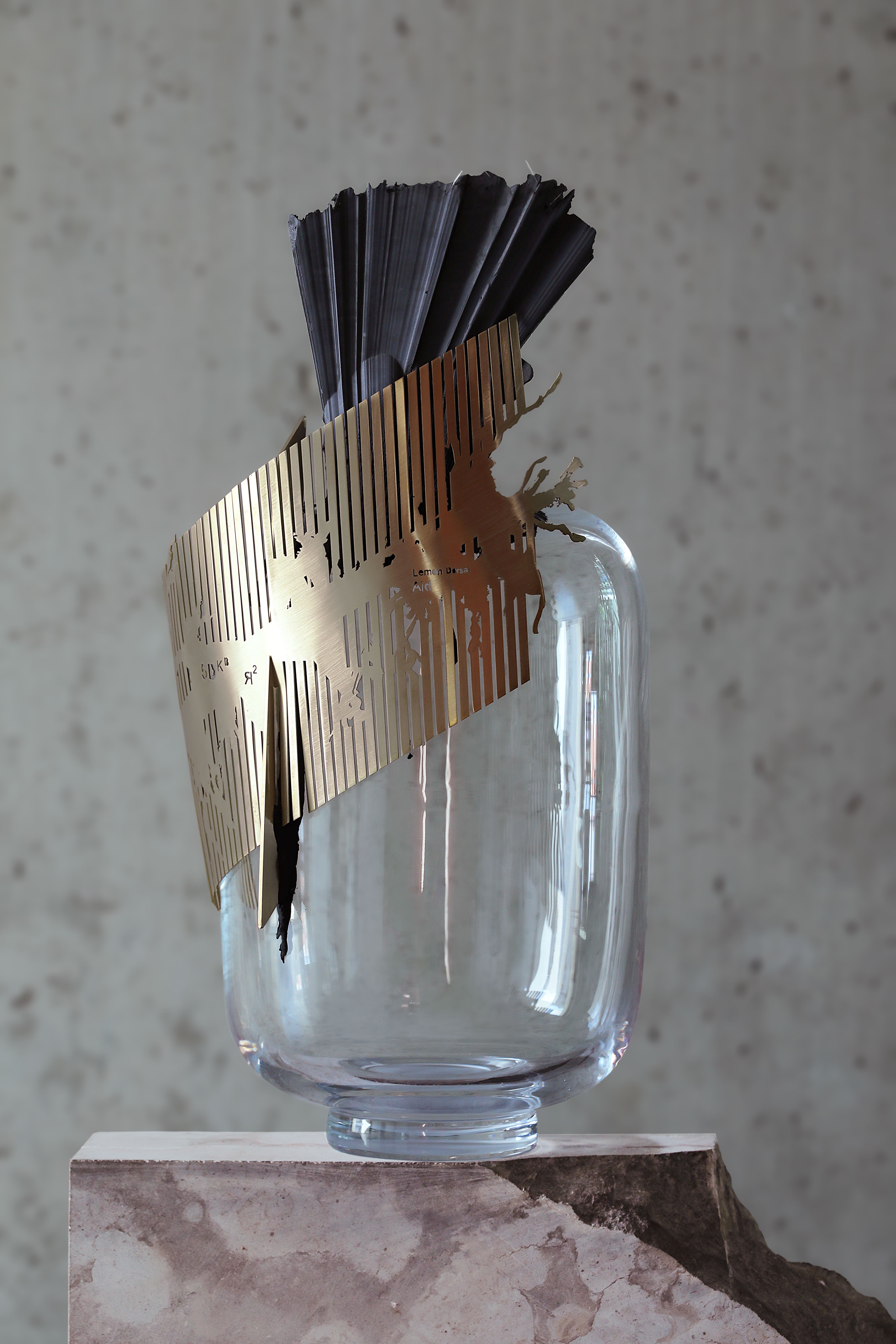
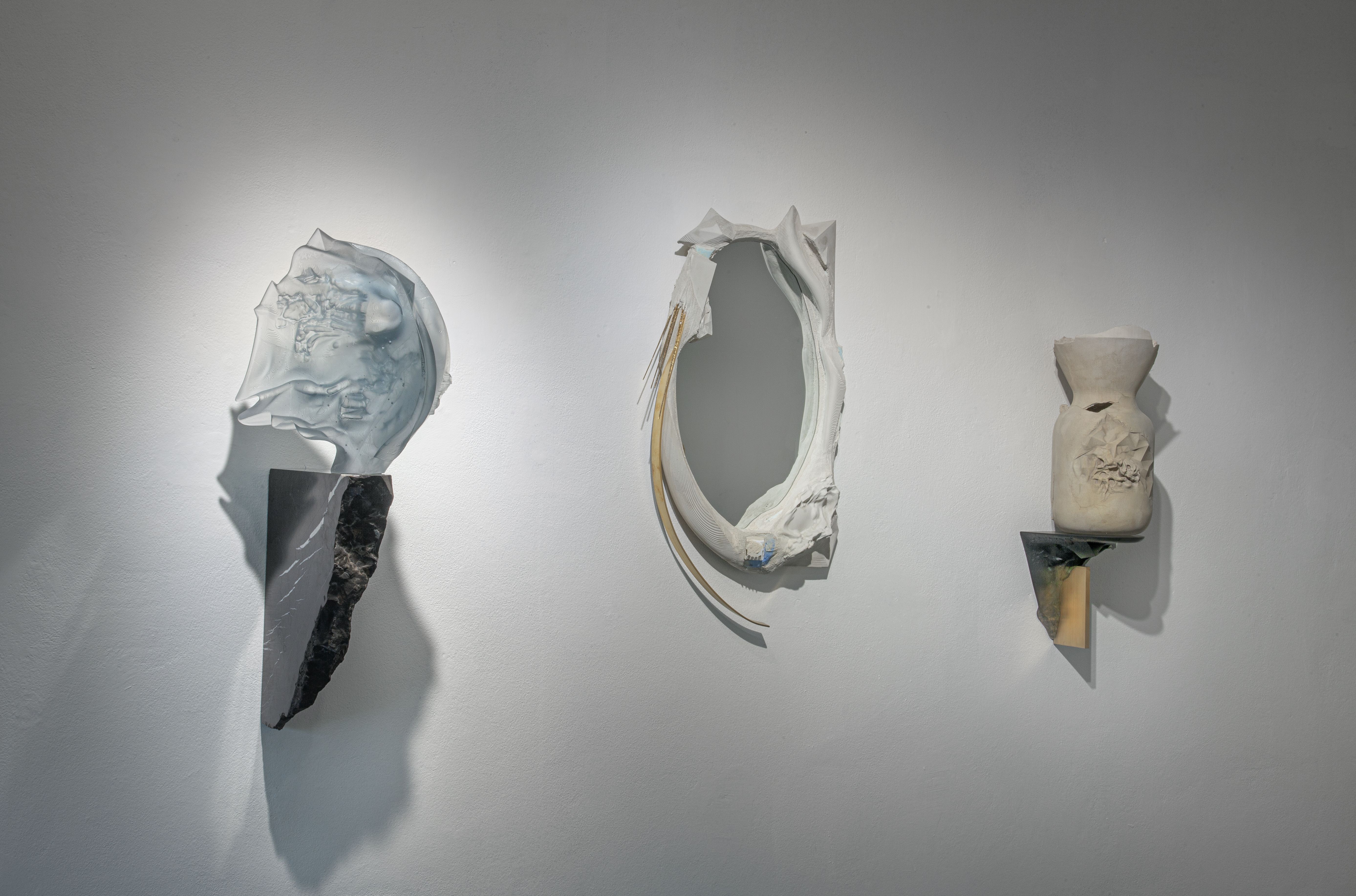
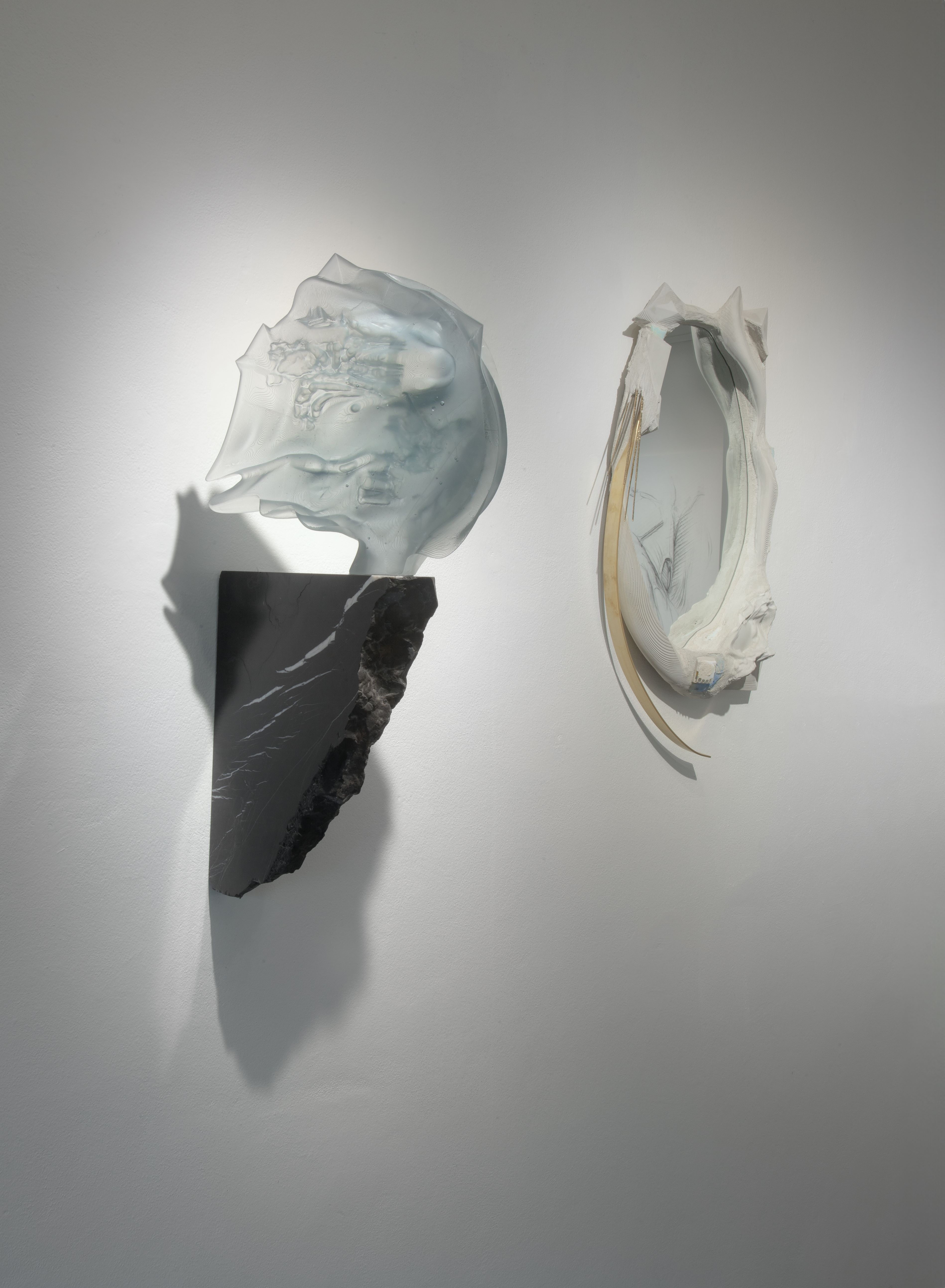
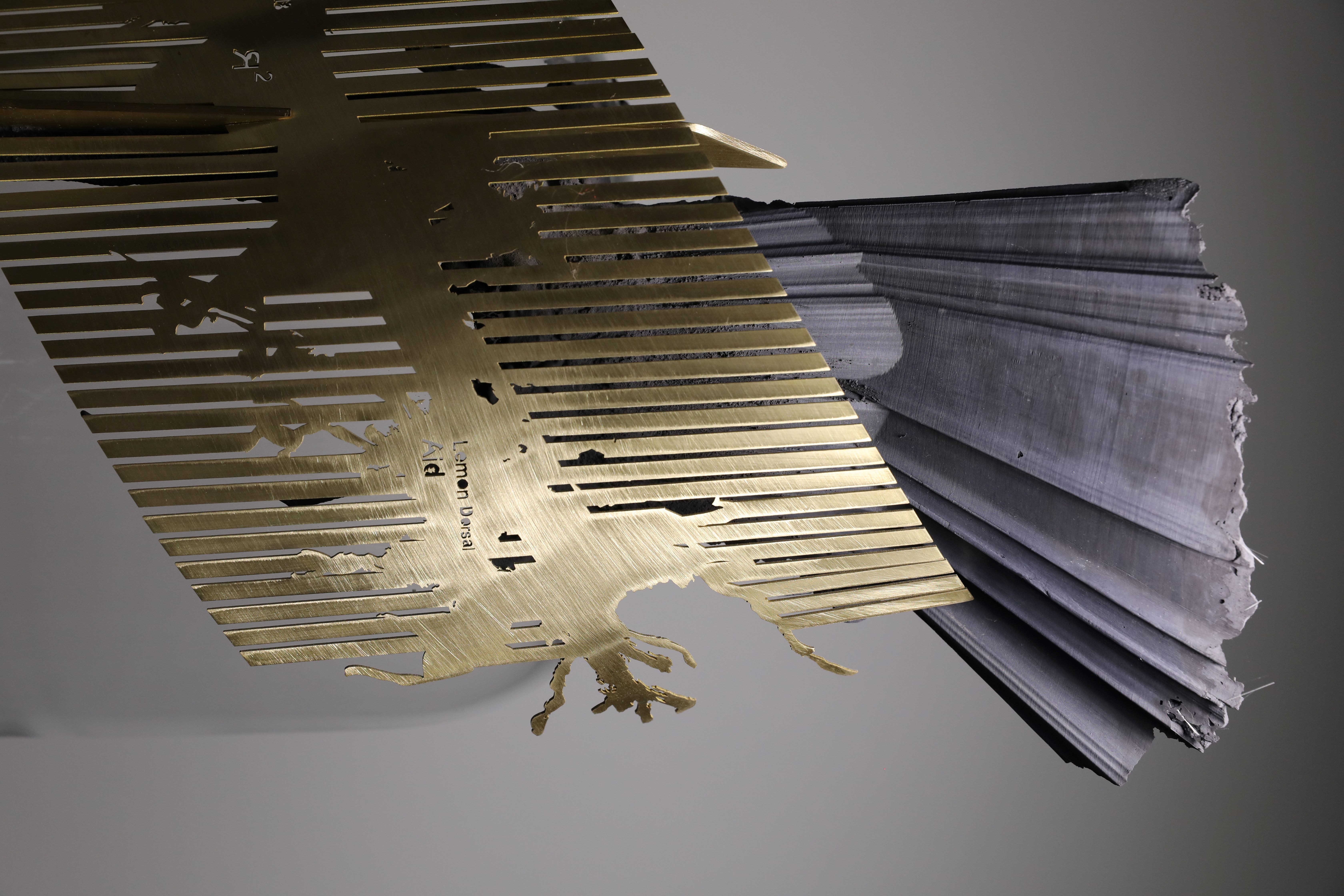
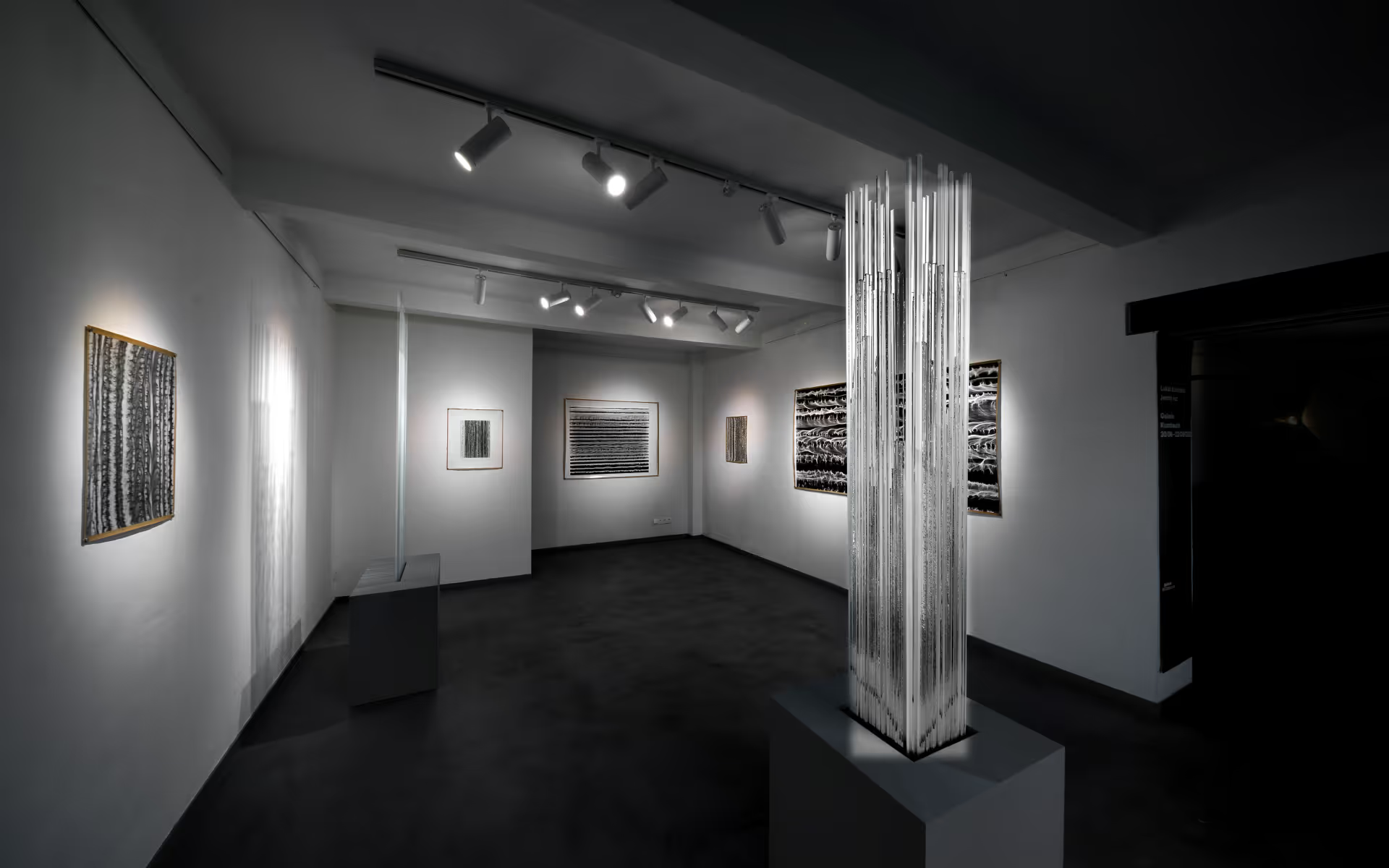
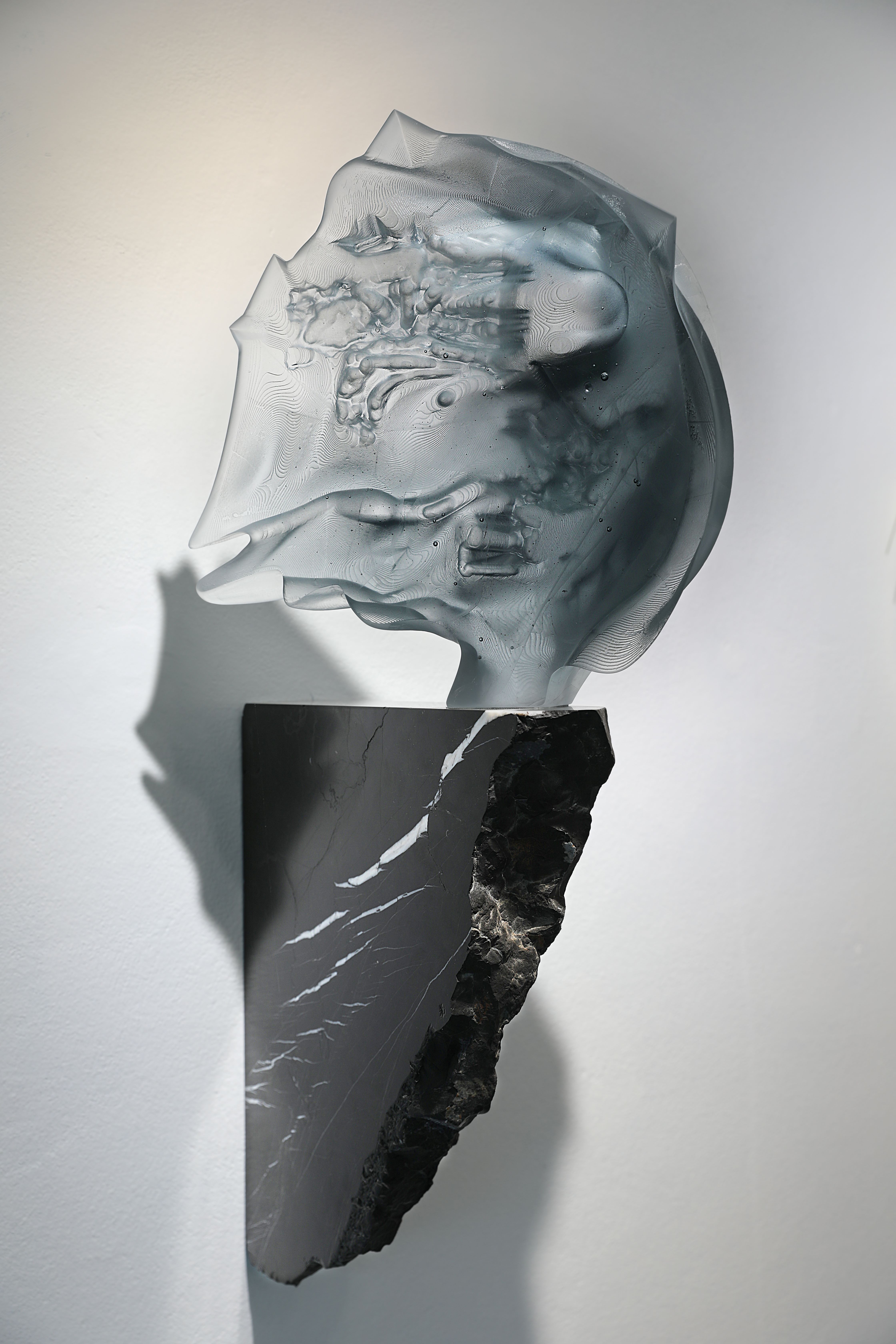
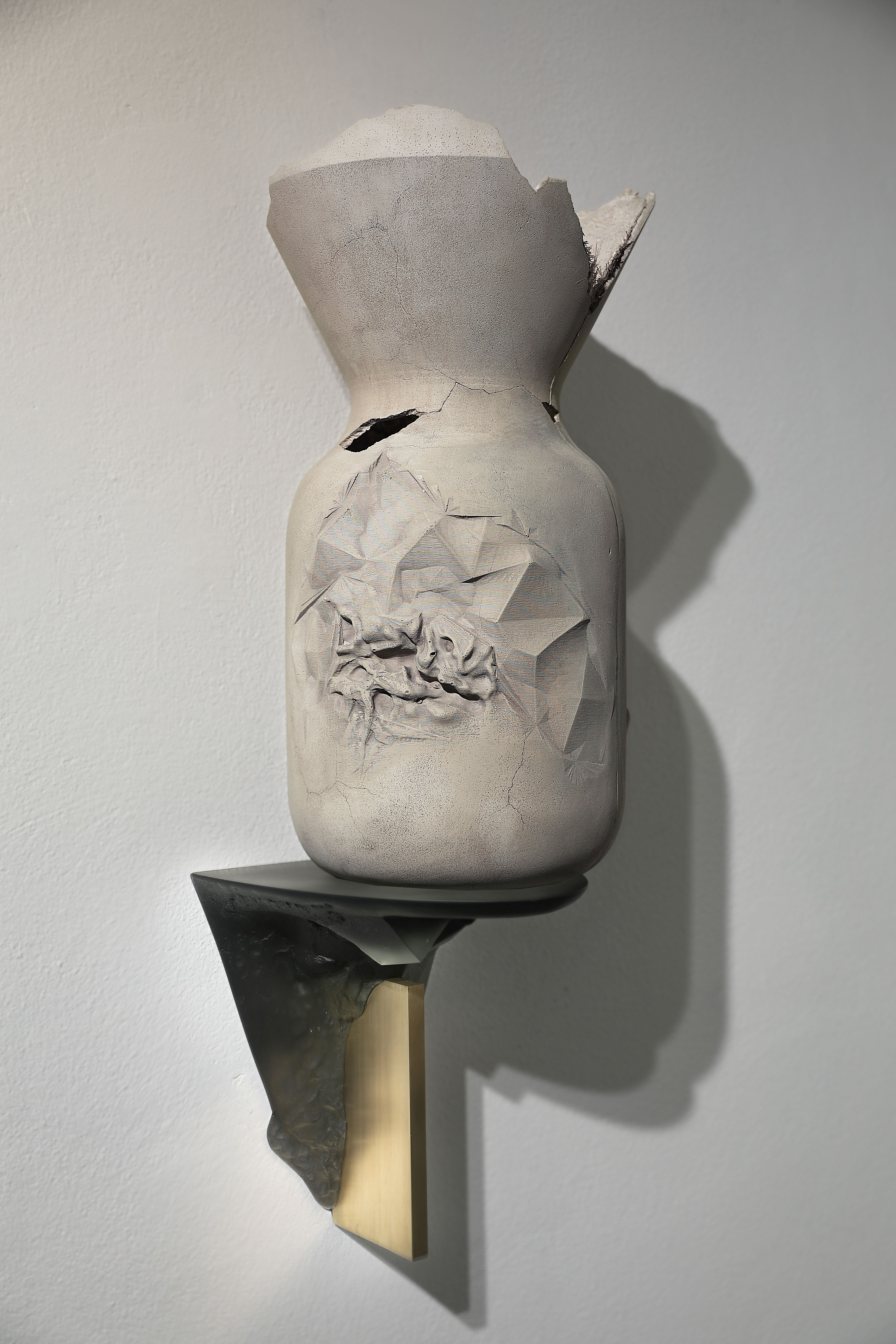
The glass sculptural objects of Philip Frank (*1987) are distinguished by enormous craftsmanship – in his works the artist combines diverse techniques and seemingly incongruous materials, thus expanding the possibilities of working with glass and related matter. In his work Frank, who also serves as the master of the laser workshop at UMPRUM, has long focused on destabilising the boundary between the functionality of design and the aesthetic value of free art. His works engage a visuality inspired both by amorphous natural shapes and by austere technicist angles and futuristic visions, not unlike the creations of H. R. Giger.
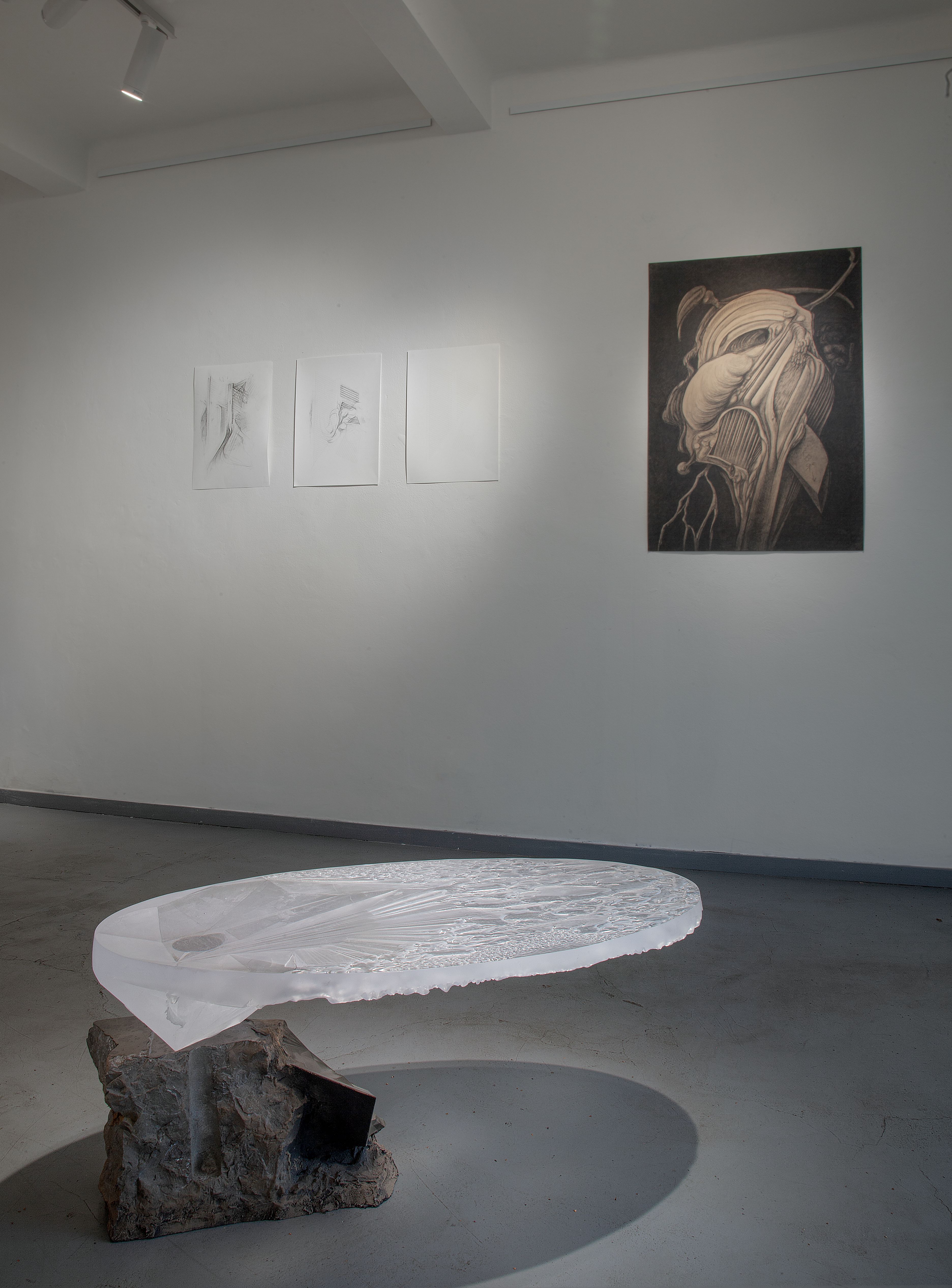
Frank's work mostly expands into space, dynamically disrupting it and setting in motion the snow-white rigidity of the gallery's white cube. The combination of rounded shapes, which refer to the original fluid nature of glass, with prickly lines reminiscent of parts of austere machinery, creates an expressive impression. The interior work Mycelium Meshamorphosis, which was shown at the exhibition Beyond (Design) Frontiers at UMPRUM, well illustrates many of Frank's recurring conceptual motifs and methodological approaches. Here the artist connects ecological resin with stone, glass and metal. The table was created by combining traditional glass casting with the use of contemporary 3D printing technologies and artificial intelligence. The magic of Mycelium Meshamorphosis thus lies in connecting different systems that give rise to an extravagant object resembling visions of science-fiction interiors.
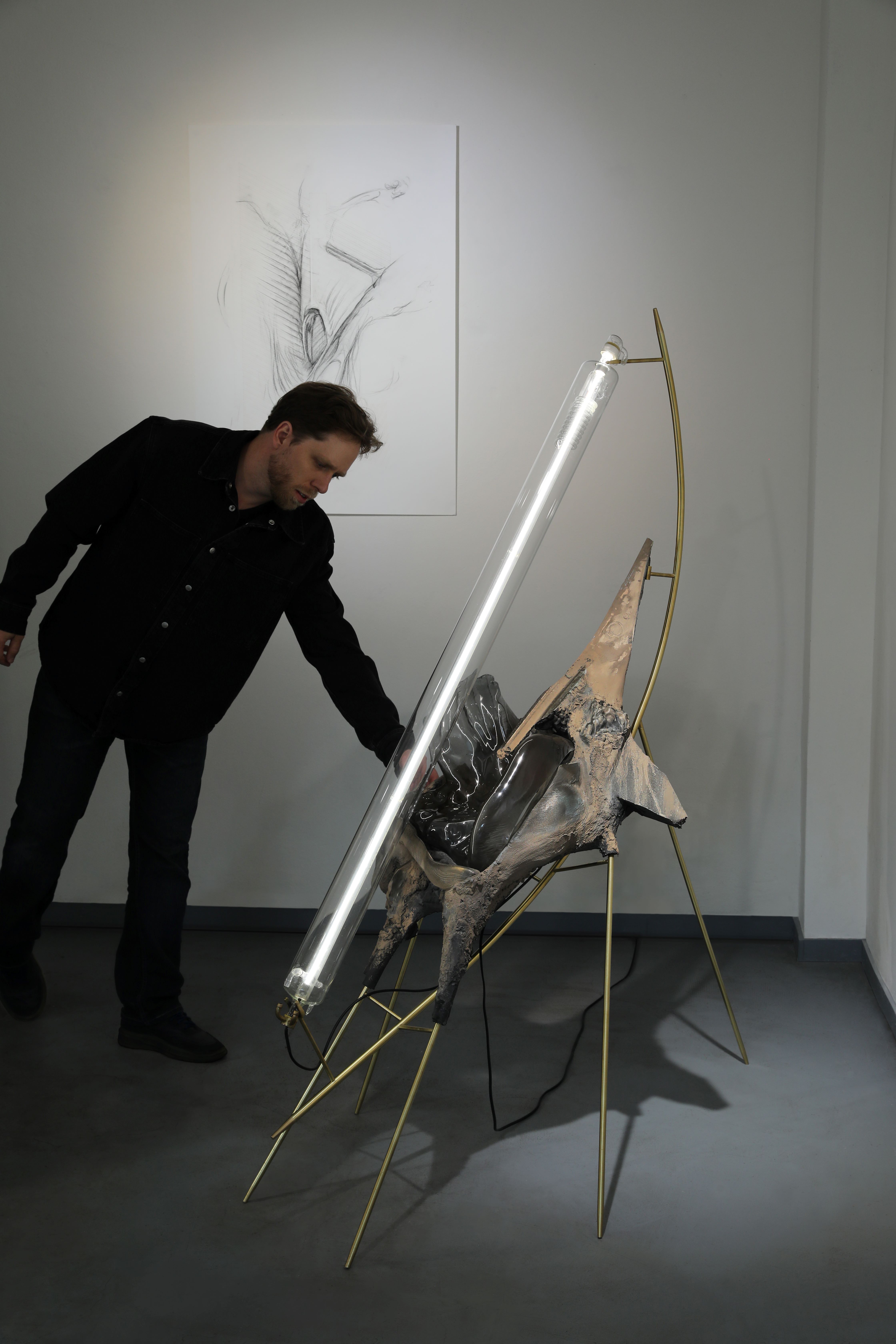


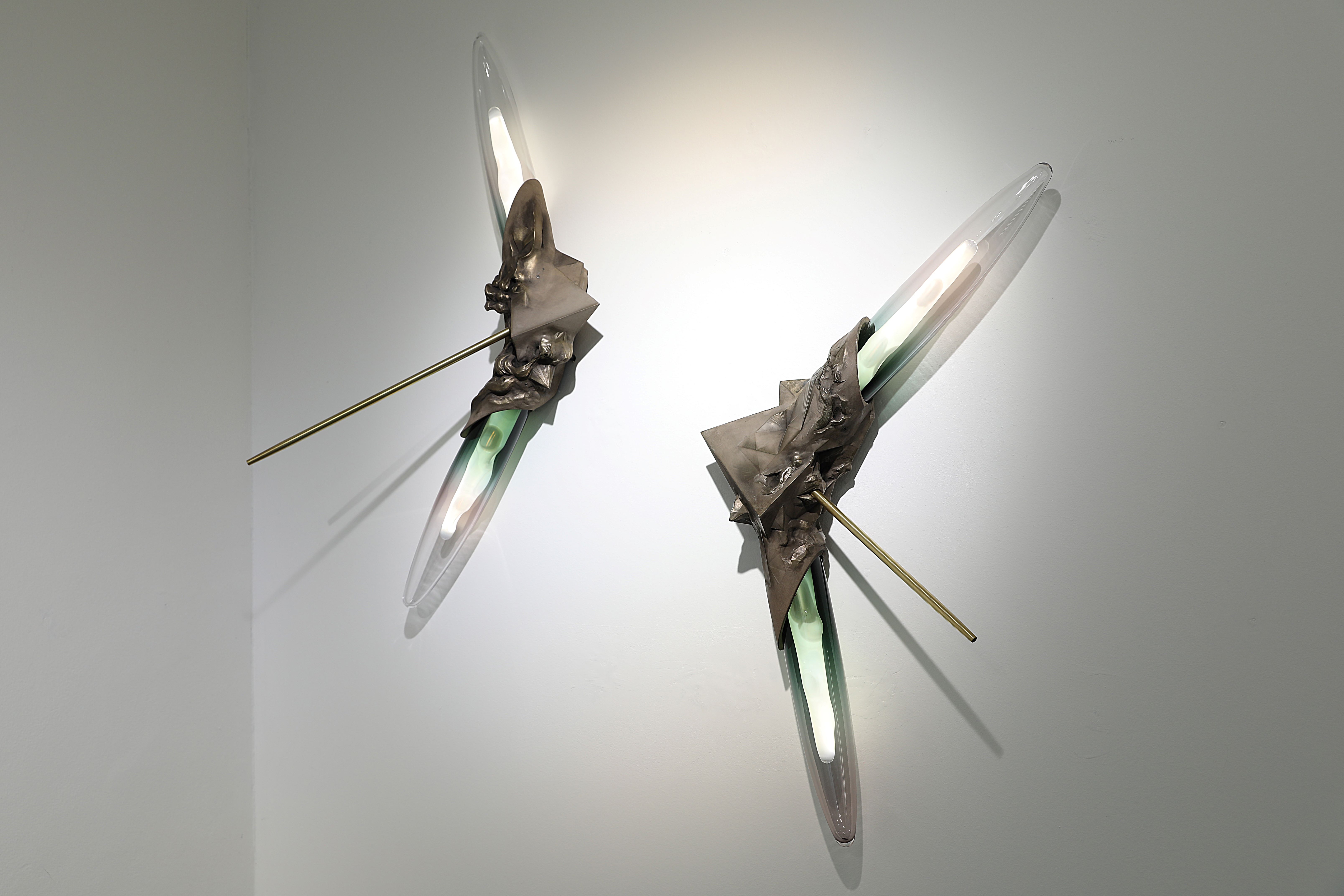
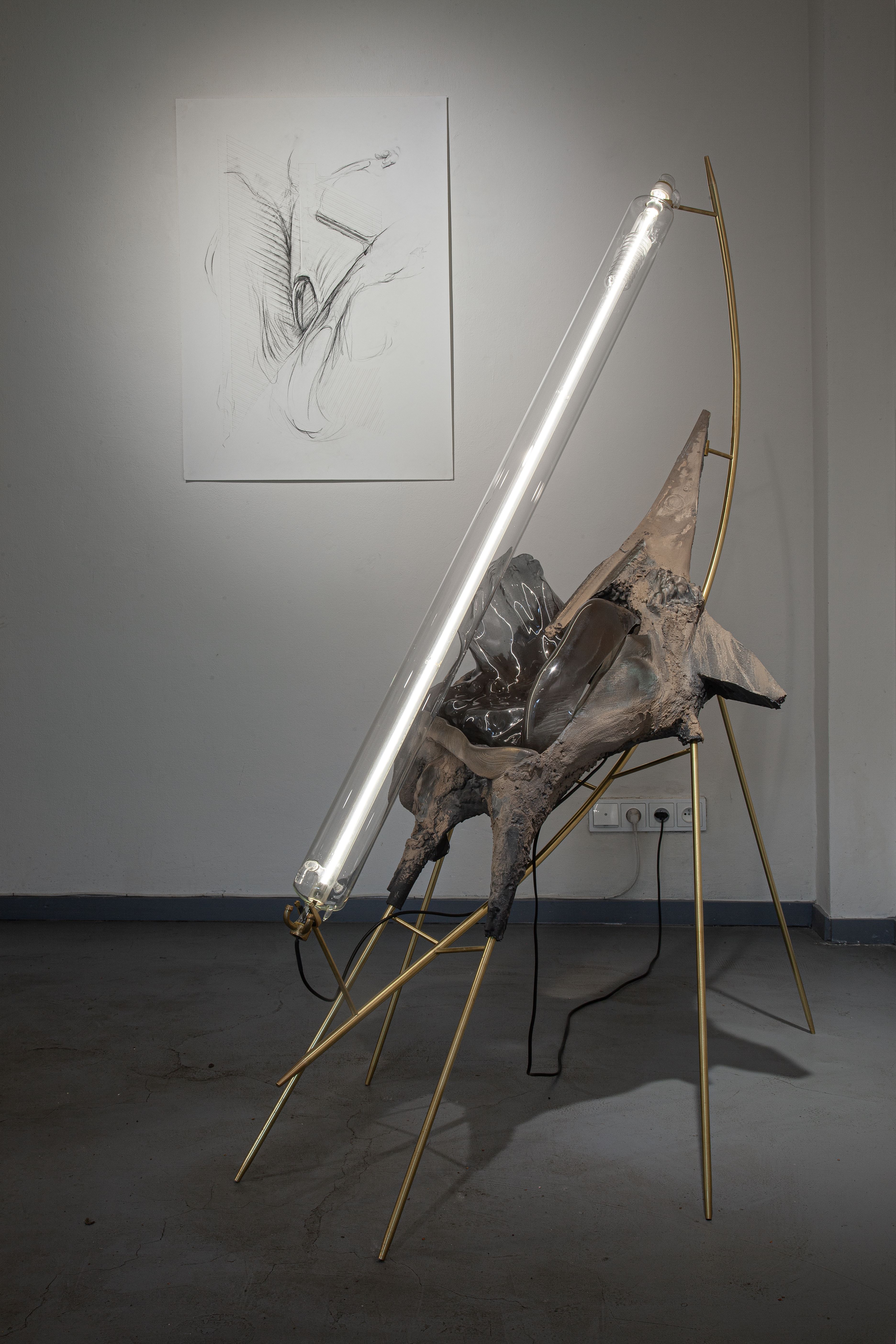
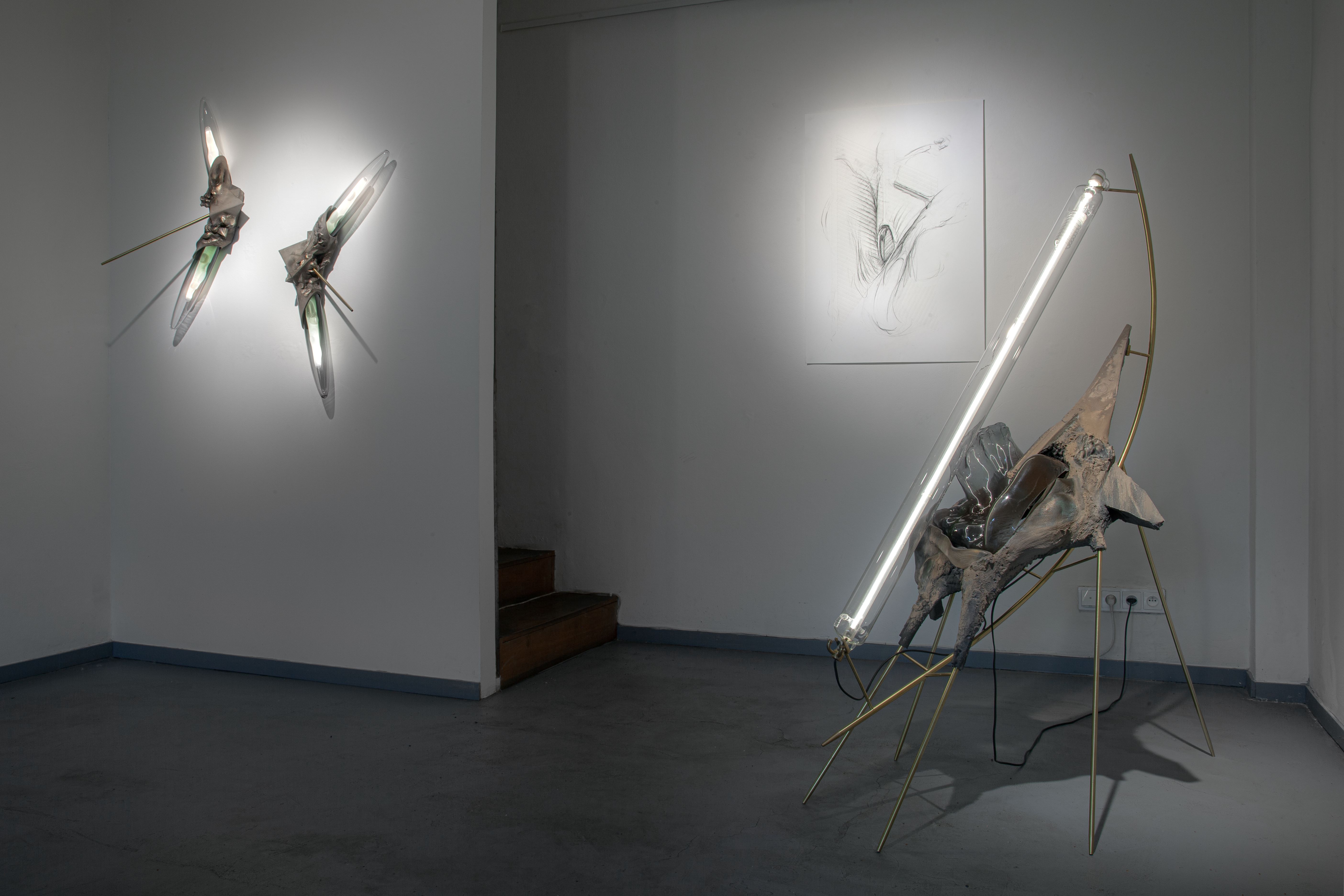
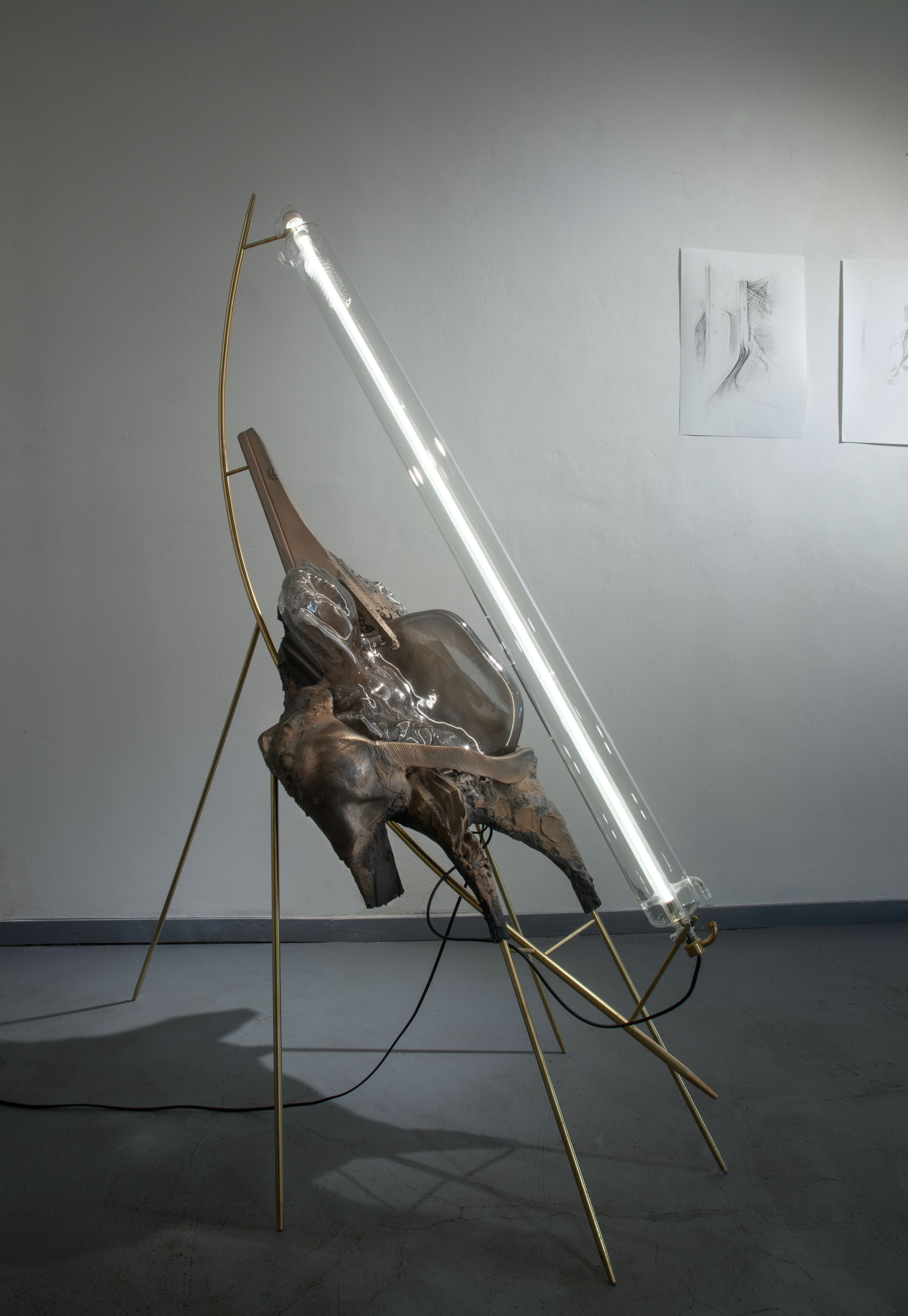
The table is accompanied by a set of lamps Trauma, which reflect a posthumanist dialogue between technology and nature. The glass bulb and socket are independent sculptural works whose shape, texture and colour are custom-made. The light cover of ecological resin with natural elements symbolises an organic body, while the brass spike rod emphasises the contrast between the living and the artificial, which thus enter into dialogue. The lamps invite reflection on how the tension between the natural and technical worlds can mutually enrich one another, thereby crossing the traditional boundaries of how design is perceived.
At Galerie Kuzebauch, Frank reveals, through charcoal and black-pastel drawings, a less visible side of his work. The drawings can be perceived either as independent artistic artefacts or as studies – records of the choreography of the material's movement that map the process of creating the artist's spatial works. The works on paper thus serve as a fitting tool for exploring the materialised journey – from the initial idea, through the refining of form, to the manual work with the material – that each of Frank's sculptural experiments gradually went through.
Agáta Hošnová, curator of the exhibition