When we look attentively at the environment around us, we find a network of connecting threads. Those that lead from the surface to the core, to elementary sources, causes and processes. Those that connect places as well as times. Those that draw out the meanings behind forms. Those that lead between eternity and temporality.
In the granary building, building materials interweave with nature on one side, and with human hands and thoughts on the other. The house is built of elements: wood, stone, brick, water, iron, glass. Behind wood is a tree, behind the tree soil, moisture, sun. Behind stone is rock, a mountain, a mountain range, the earth, the universe. Behind brick is clay, warmth, air. Behind water a spring, rain, a river, the sea, mist. Behind iron, ore, coal, fire. Behind glass, sand, heat, light, cold. Behind porcelain, feldspar, kaolin, quartz, firing.


The granary is also a space that, on a primary level, is formed by matter and emptiness and the fundamental phenomena bound to them, such as light and darkness. Beyond materials, the space is also shaped by human thought, reflecting the culture of a given era. The monumentality and meaning of the Baroque are evident even in this agricultural grain-storage building.
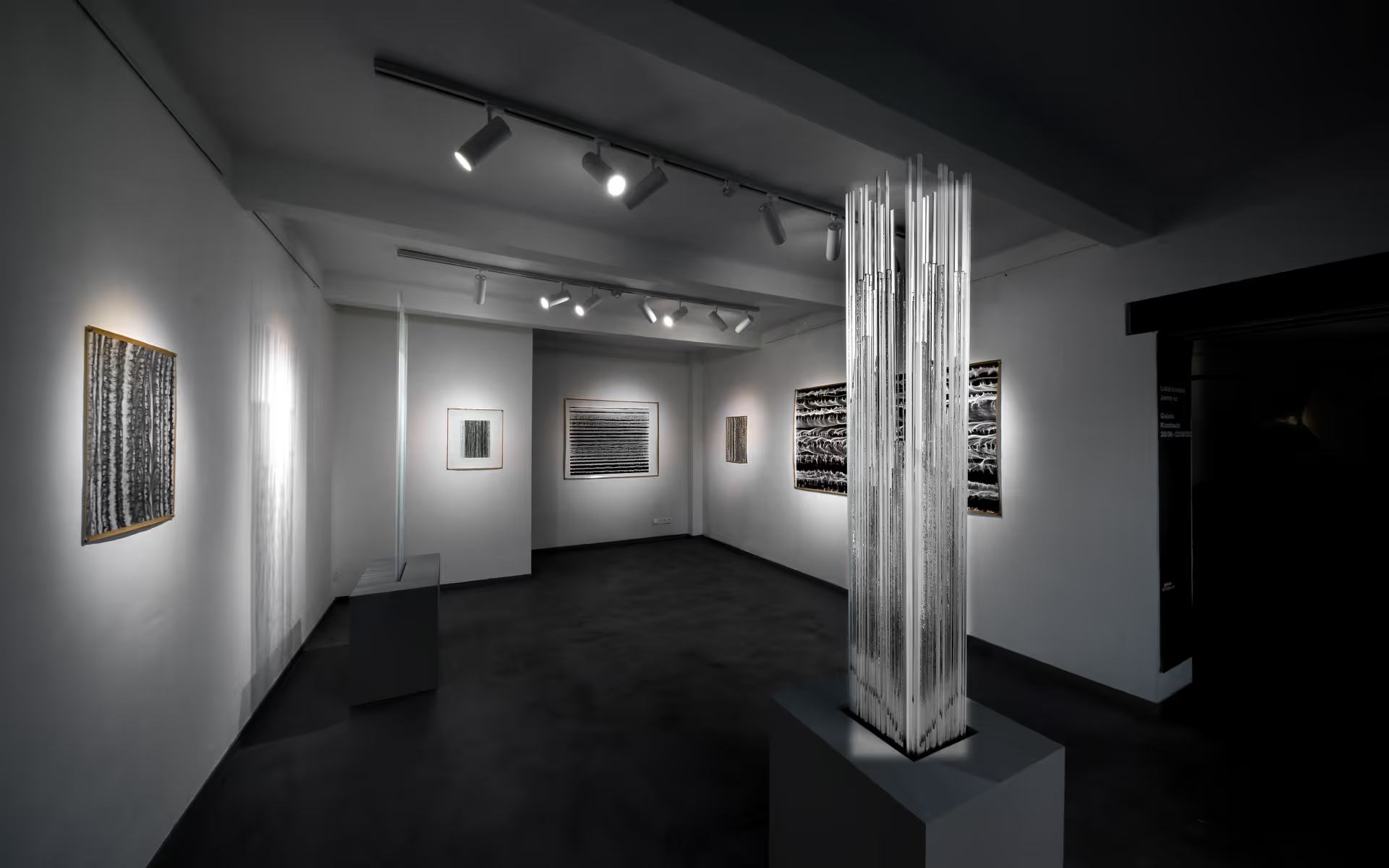
Art too can help us perceive all these connections. Lada Semecká and Petr Lada each created a special, separate installation for the granary, aiming at an experience of the whole of the space and the works within it, both pursuing a shared concept of a dialogue with the place. Into the environment of the house, and into the surrounding settlement and landscape, they place certain points that can, for a moment, reveal, capture and connect those invisible threads – like the dots in the children's game of connect-the-dots, where joining them gradually reveals the contours of the picture's meaning. Or like a ray of light that for a moment illuminates a previously invisible cobweb.
Curator of the exhibition: Pavla Melková