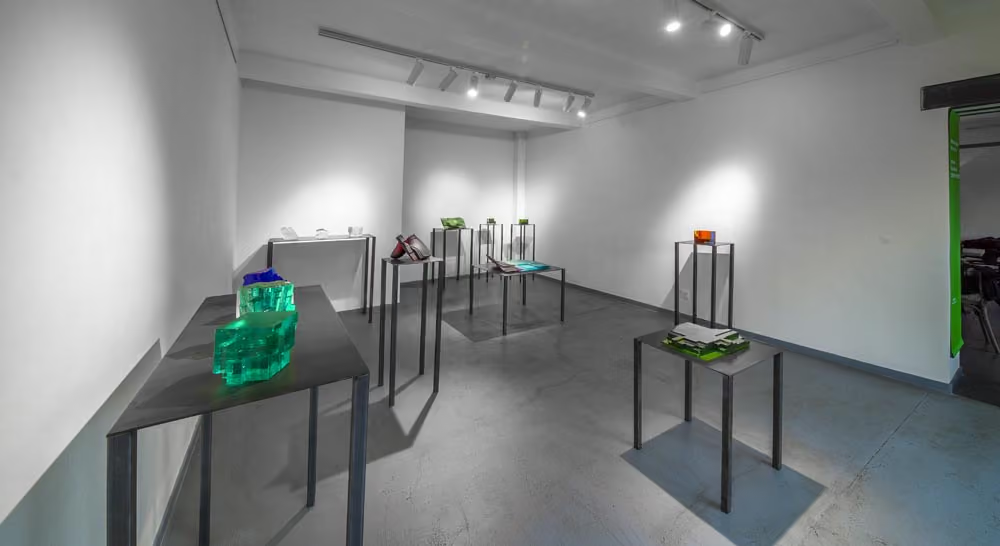
The field of geometry is among the oldest of human sciences. Indeed, its principles are inherent in almost every other discipline known to man – from the practical to the theoretical, including within the field of art. Far beyond the overt contours of a final art object, its shape, proportions, mass and location also influence the overall perceptions and emotional reactions of the observer. In this sense, geometry becomes both the subject and object of a given interaction. Moreover, the human conscience has a tendency to perceive the world as orderly and harmonious and not as being so chaotic as to perturb our human emotional sensibilities. All of this offers artists a huge array of possibilities in terms of how to work with geometric principles – whether applied, referenced, upended, and suppressed, or all of the above in concert, the artist is always seeking out the ideal and right angle of perception.
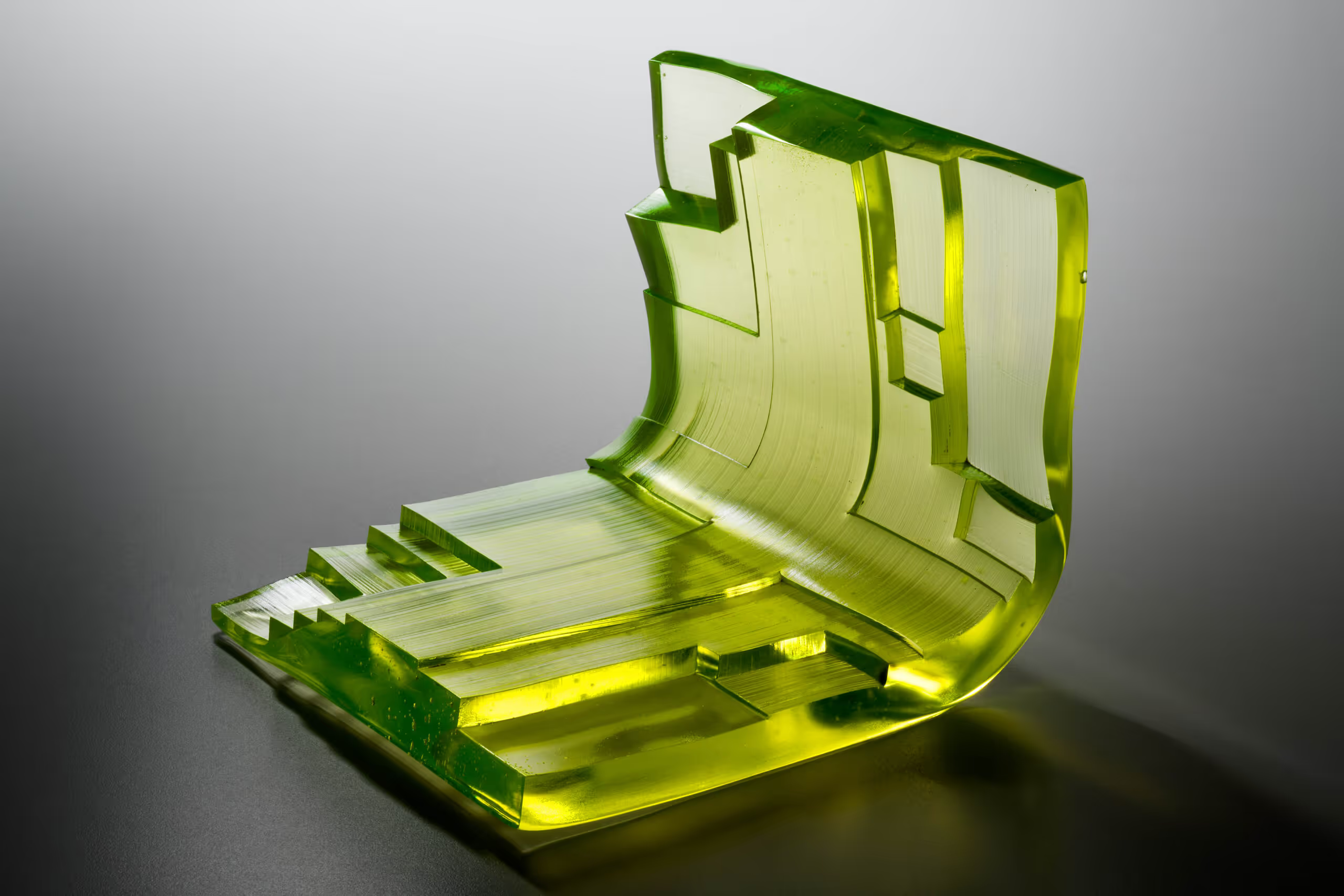
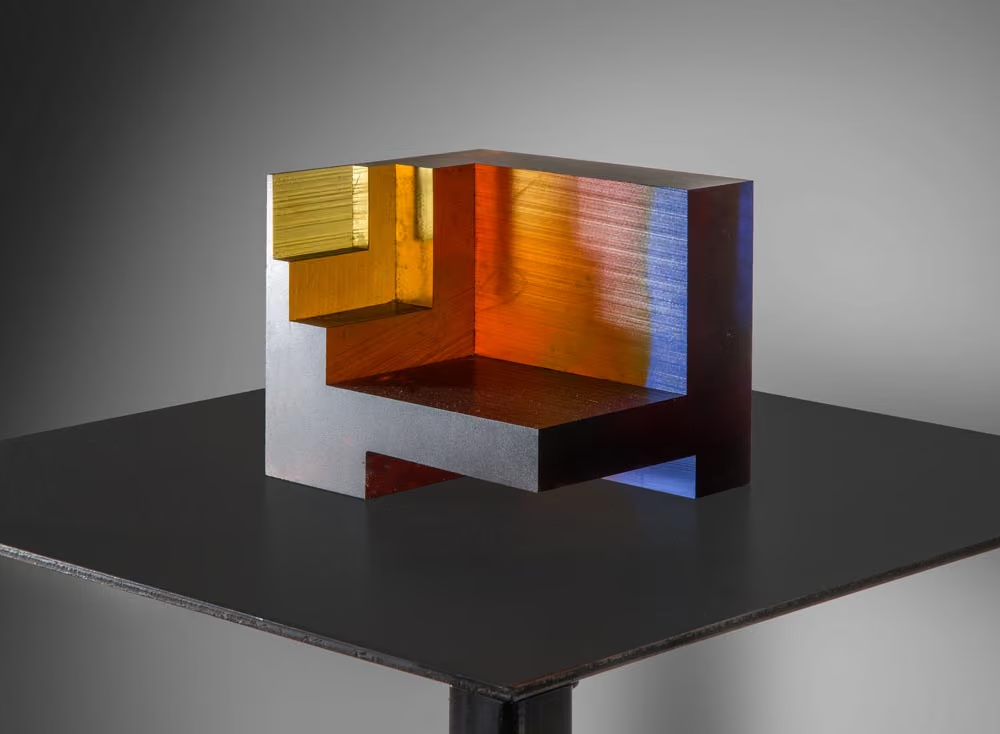
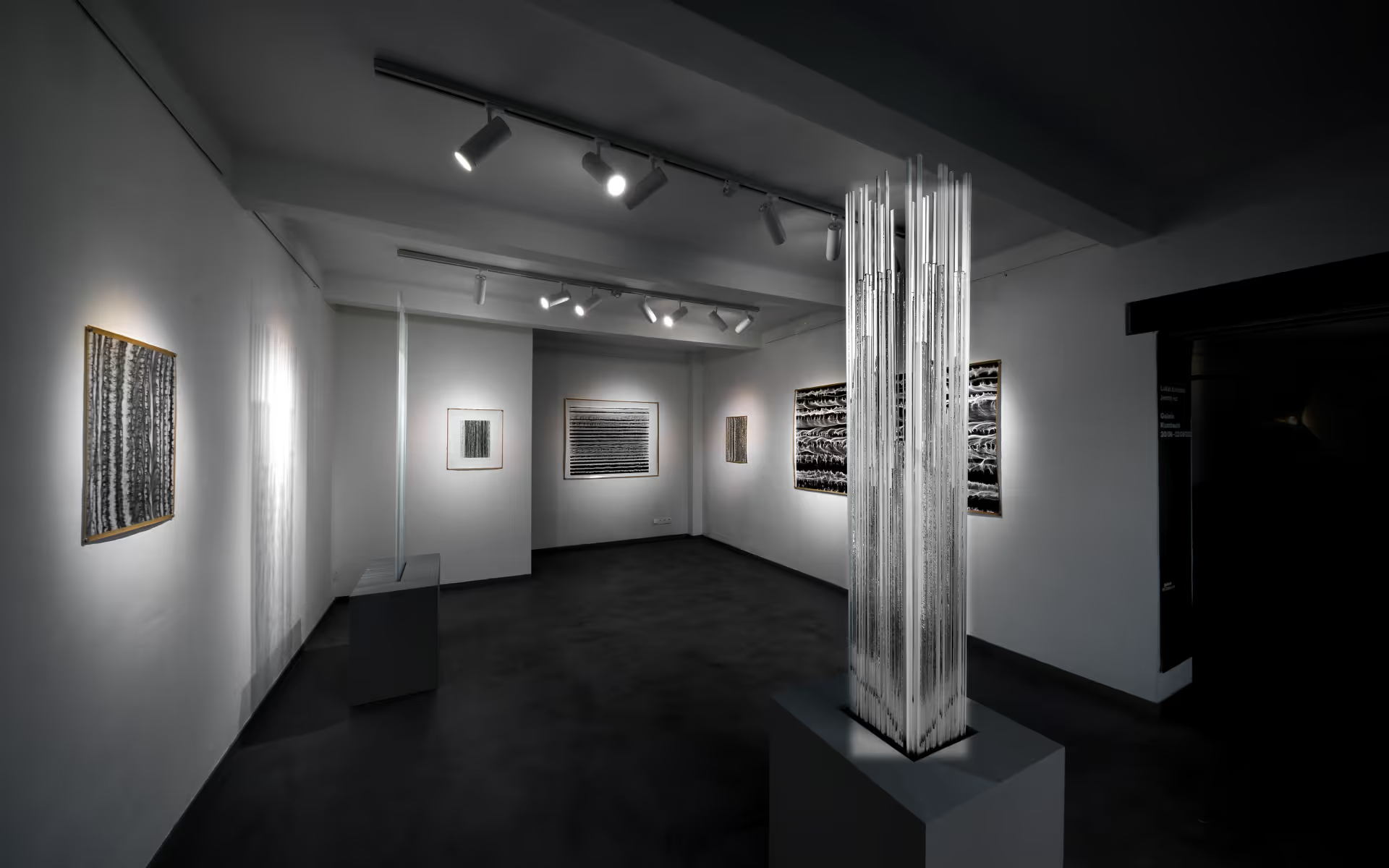
Milan Krajíček is an artist of a deeply thoughtful, rational, and capable nature, both in the artistic and in the technical and technological sense. Consequently, the aesthetic sensibilities of his works are crafted in harmony with the ultimate realisation of form, with both aspects mutually inspiring and interacting with each other. For the first time, at the Right Angle exhibition, Milan Krajíček is presenting a larger collection of works crafted with the aid of custom-made graphite objects. Unlike those typically used, these special forms offer absolute precision of form in the studio, with an exact imprint made of even the most delicate structures.
In a creative sense, Krajíček can be said to actively develop the concept of rectangularity (four right-angles), inspired by graphite prefabricated forms, resembling cubes or blocks, cut with the use of a metal saw, which leave a specific structure on their surface. This results in multi-layered geometrical glass objects, whose composition and precision can only be achieved through this very specific methodology. Subsequent working by Krajíček involves the application of glass fusing as well as hand cutting and lampworking (using a burner), so as to create an objective sense of mathematical perfection along with an equally dynamic imprint of personal artistry.
The manner in which Milan Krajíček approaches his glass artworks is certainly worthy of attention. Indeed, it represents a natural, organic fusing of both tradition and innovation, and rather than a single vocal revolutionary gesture, it forms part of a far quieter and gradual artistic evolution. Indeed, in his works Krajíček does not seek to subjugate the properties of given materials, nor does he misuse them for his own personal intellectual, emotional or artistic gratification – as is, alas, so common today. Instead, he approaches glass with respect, which is certainly no barrier at all to doing things “his own way”; nor does it prevent him from being a self-confident (but not self-indulgent) artist. After all, Milan Krajíček has been fortunate enough to find his own right angle.


Z výtvarného hlediska Krajíček rozvíjí koncept pravoúhlosti, k čemuž jej přivedly tvar a podoba grafitových polotovarů, nabízených v podobě krychlí nebo kvádrů, řezaných do této podoby z ingotu pilou, což na jejich povrchu zanechává specifickou strukturu. Výsledkem jsou mnohovrstevnaté geometrické skleněné objekty, jejichž kompozice a přesnosti nelze jiným způsobem tvarování dosáhnout. Následně Krajíček běžně využívá postupy lehání skla, ručního broušení nebo plamene hořáku, aby objektivní matematickou dokonalost svých prací subjektivně autorizoval, otiskl se do nich.
To, jakým způsobem Milan Krajíček přistupuje k autorské sklářské tvorbě, si zaslouží pozornost. Jedná se o přirozenou, organickou fúzi tradice a inovace, nikoliv jednorázově hlasitě deklamovanou revoluci, ale tiše plynoucí evoluci. Krajíček nepopírá vlastnosti materiálu, ani jej nezneužívá pro svou intelektuální, emoční nebo řemeslnou exhibici, jak je dnes běžné, naopak ke sklu přistupuje s respektem. To mu však nijak nebrání „dělat věci po svém“, být sebevědomým, nikoliv však sebestředným tvůrcem. Protože Milan Krajíček již svůj pravý úhel našel.
Petr Nový, kurátor výstavy