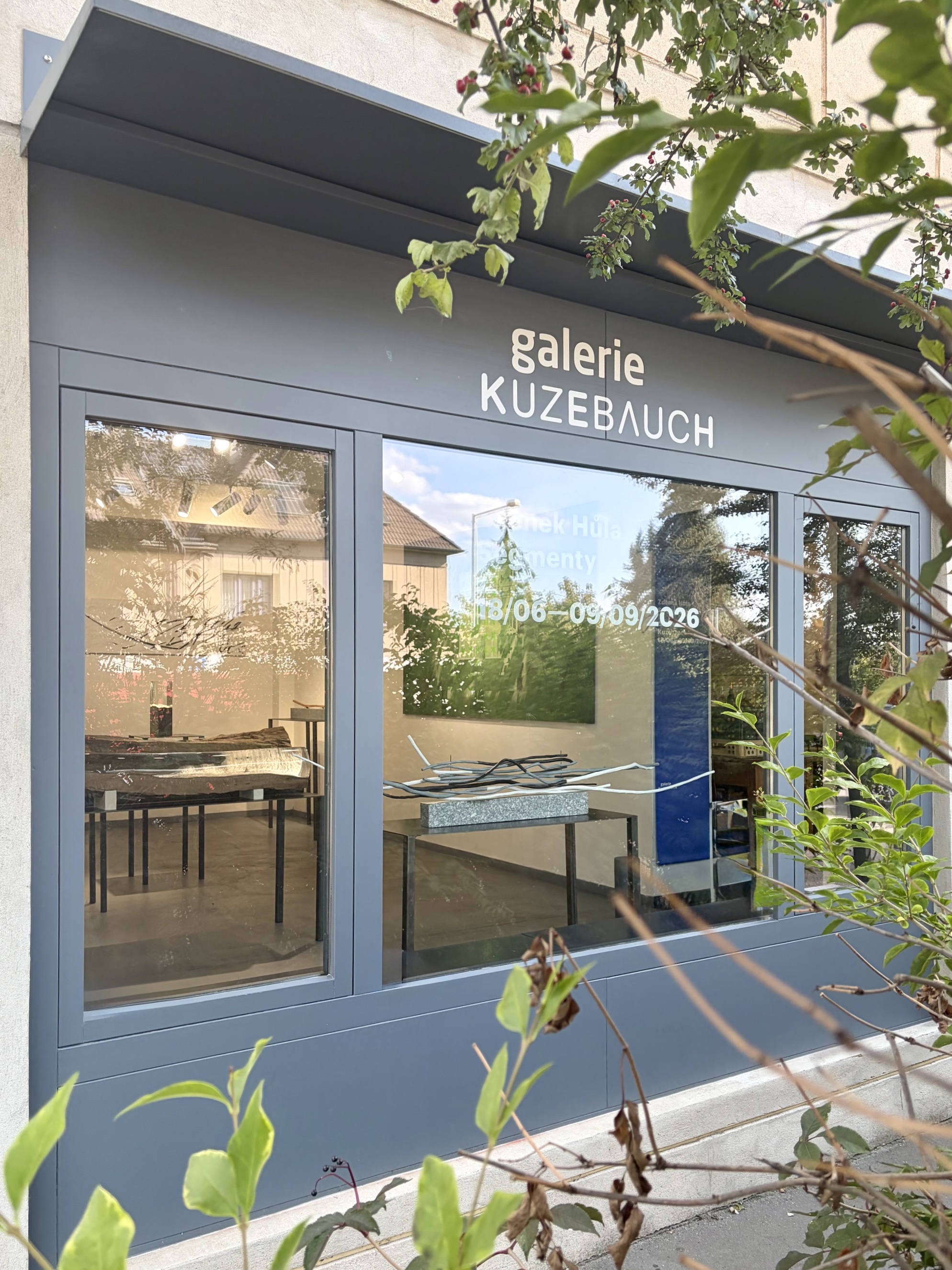
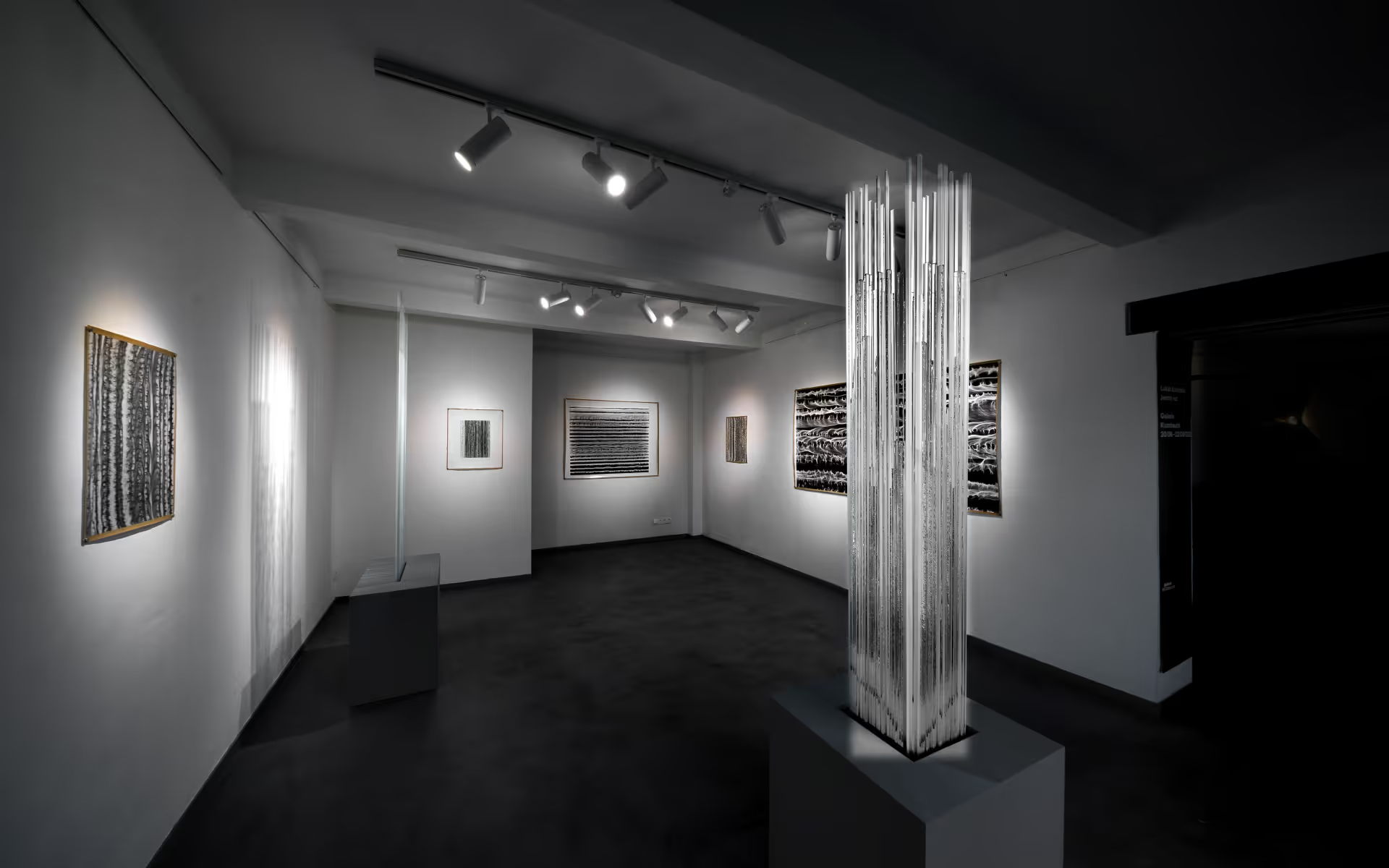
From October 20–25, 2026, Galerie Kuzebauch will be presented in Paris at the second annual Ceramic Art Fair and Glass, held at the Maison de l’Amérique latine. This exhibition project brings together several generations of prominent figures in Czech studio glass, showcasing glass as a distinct artistic medium where tradition, experimentation, personal experience, and diverse approaches to form, light, and matter converge.
Glass is born in fire, shaped in a molten state, and gains strength and stability upon cooling. This transformation is where the moment meets duration—fluidity meets form. In this way, glass preserves the memory of its creation and the trace of time that shaped it. The exhibition presents several generations of artists who work with glass as an autonomous artistic medium. The Czech tradition of studio glass, shaped since the second half of the 20th century, meets individual experiences and diverse cultural perspectives here. The common denominator of the exhibited works is an interest in form, light, and matter, as well as the symbolic and meaningful potential of glass.
The work of Vladimír Kopecký and Jiřina Žertová represents one of the essential foundations of Czech studio glass. In their pieces, glass becomes a vehicle for painterly gesture, rhythm, and structure. Here, the material transcends its traditional function and transforms into a medium for free artistic expression. Subsequent generations of artists build upon this tradition, developing the material in new contexts. Vladimíra Klumpar works with glass mass as a sculptural medium. Her cast and hand-ground objects capture light and the internal tension of the material, while also reflecting personal experiences and memories associated with life in Mexico. Inspiration from the subtropical landscape, local symbolism, and Purépecha culture is projected into forms that carry echoes of natural structures and the variability of light. In dialogue with her work are the pieces by Matyas Pavlik, who returns to the motif of the mask in his objects. Faces stripped of specific identity act as an archetypal symbol—silent, yet expressive. The artist has returned to this motif over a long period, transforming it in various sizes and variations, thereby creating space for interpretation and mutual communication between the individual objects.
The archetype of the vessel, one of the oldest forms in human culture, appears in the work of Josef Divín. The artist draws on the traditional technique of blown glass, which he develops through experiments with material and surface. The vessel here is not merely a functional object, but a symbol of space and memory. Eva Vlčková explores organic dynamics and the variability of matter in her work. Her sculptures resemble natural structures and shapes formed by the movement of water, light, or growth. Ondřej Strnadel starts from simple geometric forms of the circle and oval, which he subtly deforms. His objects appear as if they have captured the moment when molten glass has just ceased its movement, and the solid mass still retains the memory of its incandescent state.
The exhibition showcases glass as a medium capable of carrying various meanings—from working with archetypal form to experimenting with material, and through to personal experience, memory, and relationships with natural or cultural structures. The individual works create an open dialogue, interweaving different generations, artistic approaches, and ways of thinking about the material. What is not spoken in words becomes visible here through light, shape, and matter.
Inka Ličková, exhibition curator