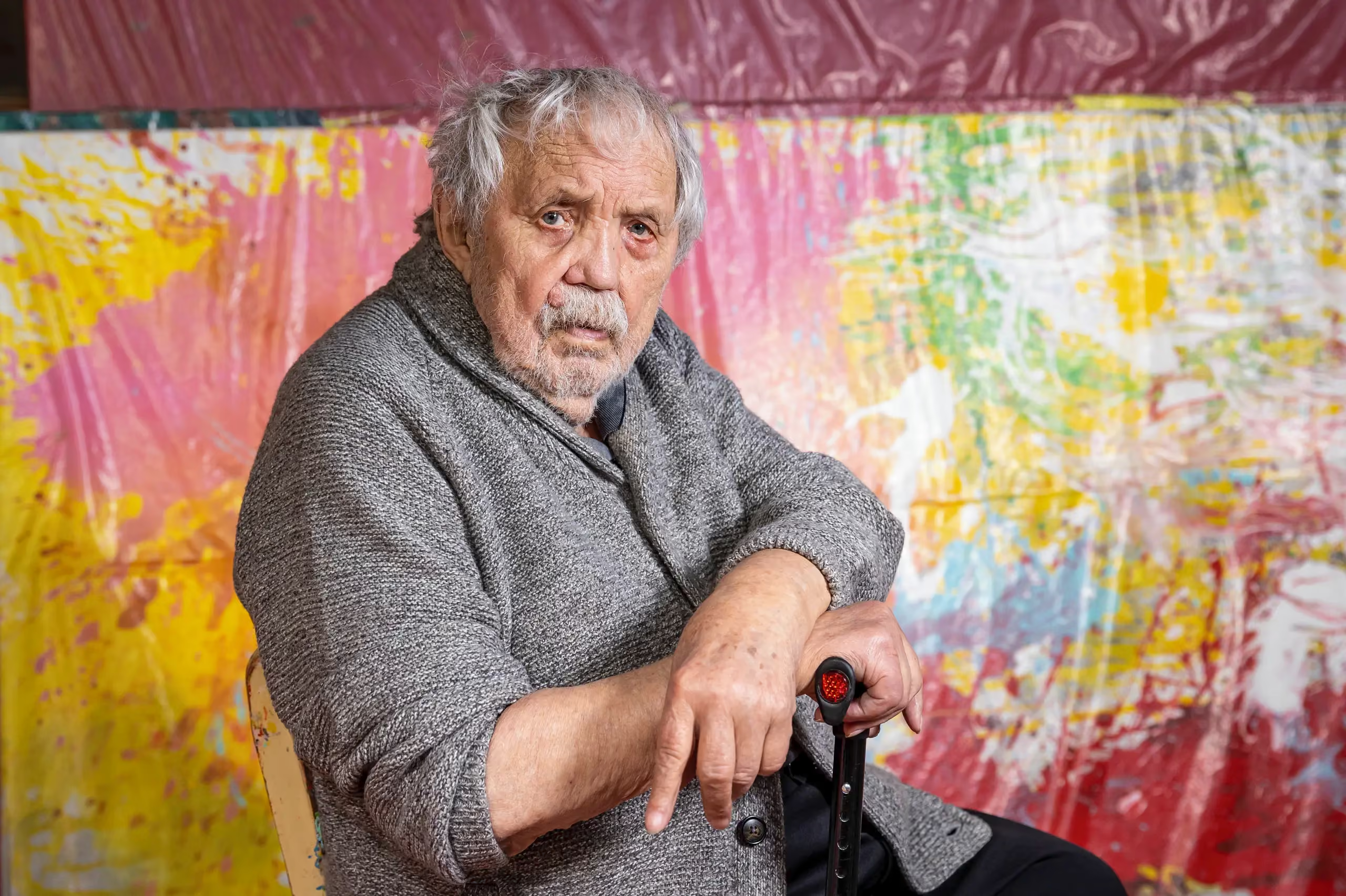
Vladimír Kopecký (1931-2026) is a painter, graphic artist, glass artist and educator, and one of the most prominent figures in post-war Czech glass art. He studied at glassmaking schools in Kamenický Šenov and Nový Bor before continuing at the Academy of Arts, Architecture and Design in Prague in Josef Kaplický’s Studio of Monumental Painting and Glass. From the beginning of his career, he has moved between painting and glass, naturally interweaving the two approaches in his work. From 1990 to 2008, he headed the Glass Studio at UMPRUM, where he influenced several generations of Czech glass artists.
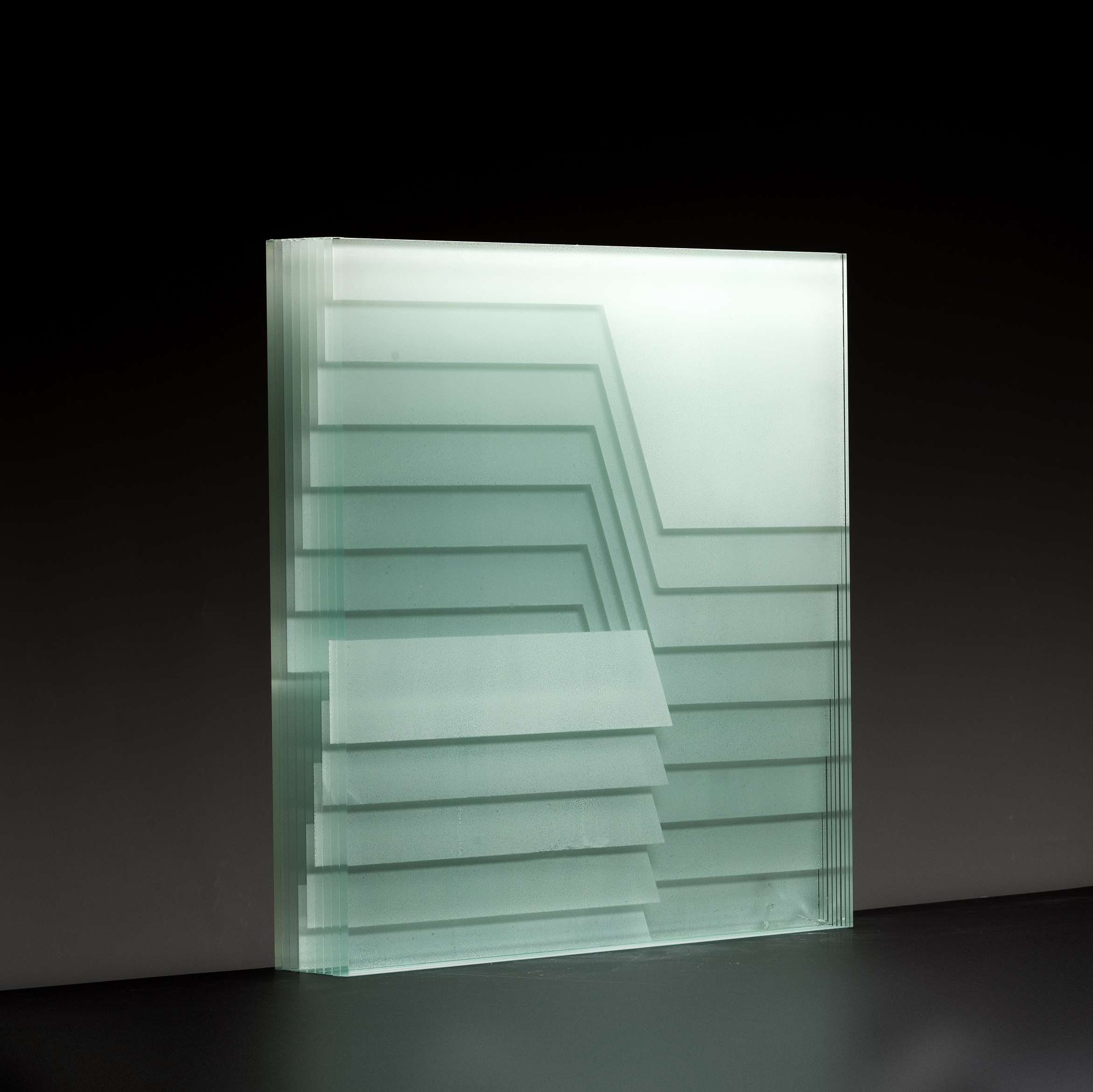
Kopecký’s work is characterised by a tension between strict geometry and spontaneous, expressive gesture. Rather than treating glass as a material whose refinement should be emphasised, he approaches it as a means of artistic expression that can be handled freely, often in deliberate opposition to conventional ideas of its beauty. From the 1960s onwards, he developed the concept of so-called “ugly glass”, later working with layered sheets of glass, sandblasting, paint and found materials. In his objects and installations, he combines painterly gesture with the transparency and spatial qualities of glass, exploring themes of space, silence, anxiety and melancholy.
Alongside his smaller-scale works, Kopecký has created numerous monumental pieces for architecture and public spaces in the Czech Republic and abroad. He also participated in Expo 1958 in Brussels, Expo 1967 in Montreal and Expo 1992 in Seville. His work is represented in major public and private collections and has received numerous awards, including a gold medal at Expo 58 in Brussels and the Czech Ministry of Culture Award for his contribution to the visual arts.
Ceramic Art Fair + Glass
Eva Vlčková
Jiřina Žertová
Josef Divín
Matyas Pavlik
Ondřej Strnadel

Bouře barev
Vladimír Kopecký

Geometrie
Vladimír Kopecký
Works