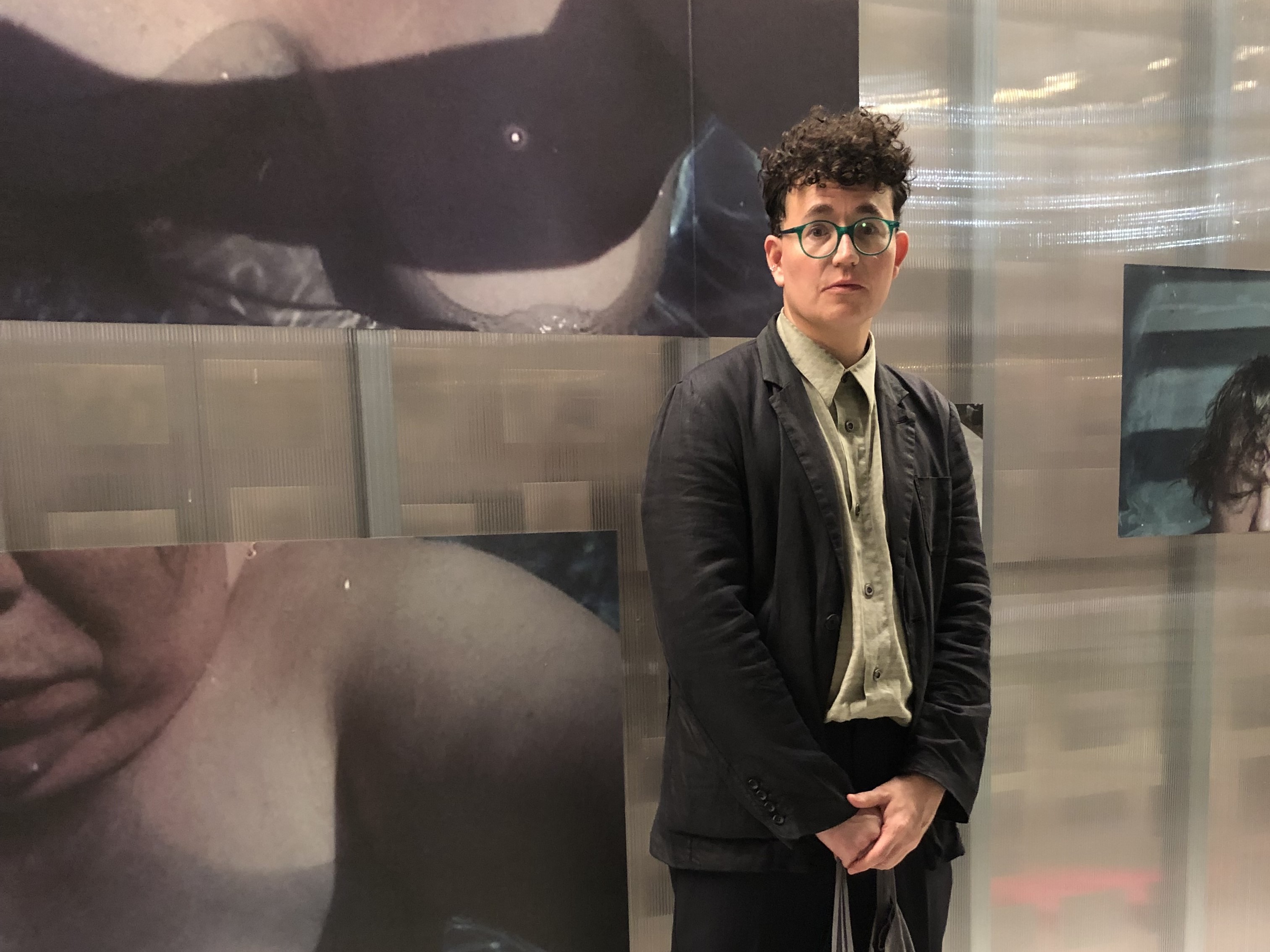
Mark Ther often mentions that he enjoys reflecting on eras he never experienced himself. For this exhibition at Gallery Kuzebauch, however, he makes an exception and returns to his early childhood. Known for his ability to combine various artifacts with his own work to create unique environments that blur the line between exhibition and scenography, the artist invites visitors into the interior of a West German dining room from the 1960s to the 1980s. In this abandoned room, where time seems to have stood still, an unfinished breakfast remains. And it is precisely this that serves as a clue that a tragic event has taken place here.
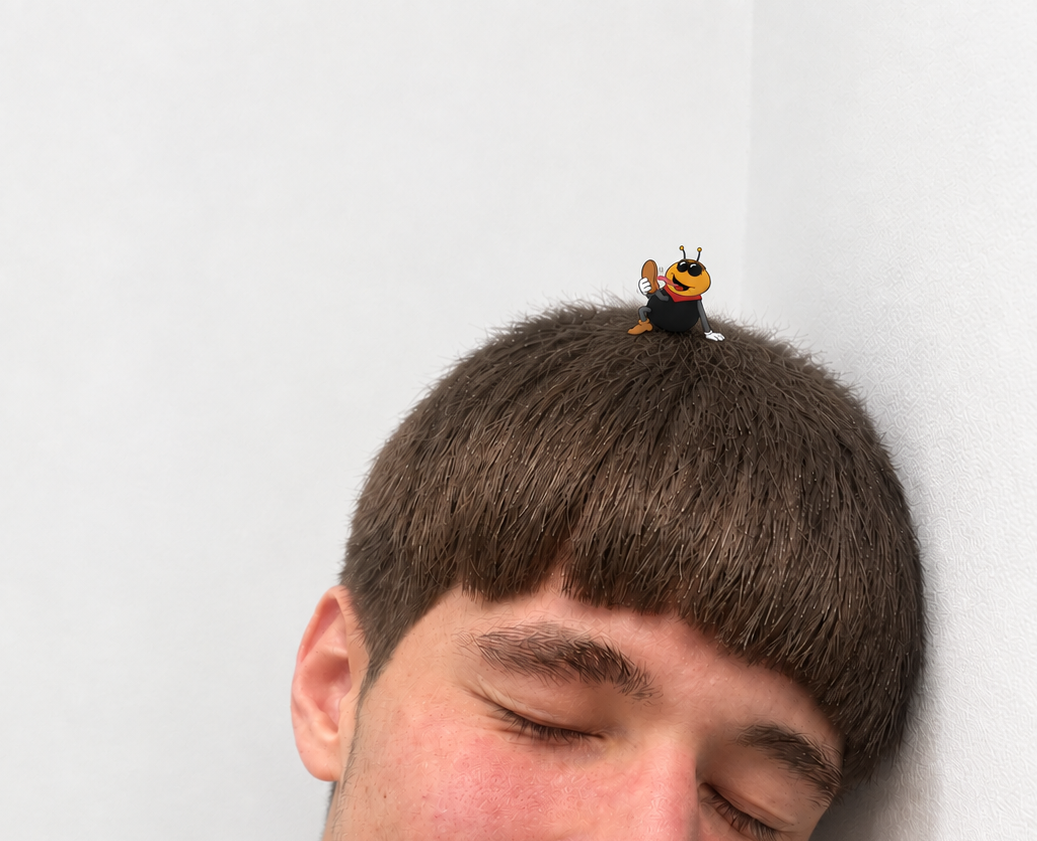
Puck is a character from the Maya the Bee series, associated with the childhood of an entire generation. What draws you to this character, and why did it become the central motif of the exhibition?
An entire generation knows Maya the Bee, partly thanks to Karel Gott. I always found Puck the fly quite strange and somewhat on the periphery. Unlike Puck, all the other characters were beautifully rendered. Puck wore glasses and had vision problems—he was essentially blind—which was something that connected us, and I think I was able to identify with him best.
In your work, you often return to eras you haven't experienced yourself, but this time you are turning to your own childhood. What led you to this personal return?
I can never exhaust an era I haven't experienced. It is an endless archive from which one can draw forever. The moment of childhood feels somehow unfulfilled to me, and I would like to return to it and stop time. A part of my childhood will be present in the exhibition, but it will be enriched with other themes and moments of life that are not directly related to it.
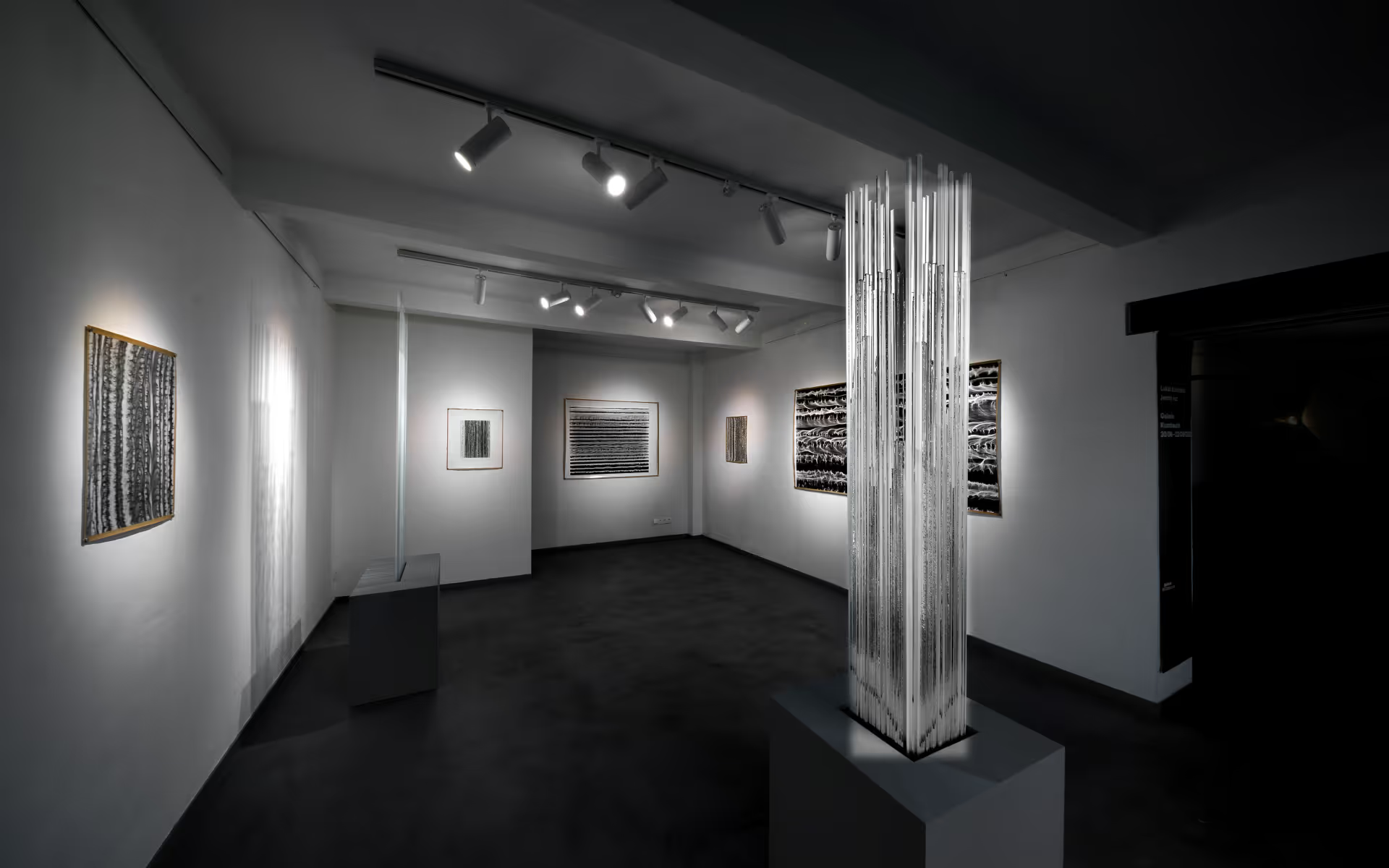
The exhibition is being created at Gallery Kuzebauch, a space primarily associated with glass. What role does glass play for you in this case?
Glass is not my primary medium, but in this case, it became a kind of site-specific requirement, which was an interesting challenge for me. I worked with it in my own way, in a flatter form and using graphic interventions. Glass has been with me my whole life, for example in the form of vases and heirloom pieces from my grandparents. I was primarily interested in utilitarian and cut glass; I even collect some pieces. However, art glass has never fundamentally fascinated me. This is not the first time I have worked with this material, though. Back in 1999, I used screen printing to transfer scenes from the Kama Sutra onto glass, where I played with the shifting of gender roles.
The exhibition uses the scenography of an abandoned dining room, where an unfinished breakfast remains as a trace of a tragic event. Why did you build the story around this contrast between the world of childhood and death?
Back then in West Germany, I was fascinated as a child when I saw everything my grandparents had for breakfast. Various types of spreads, pâtés, Nutella, as well as different kinds of bread, drip coffee, and whole milk were served on the table. It is an unforgettable memory for me that will never be repeated. Just as some specific flavors from that time are unrepeatable, the group at the table will never meet again because most of them are no longer in this world. It was this memory, where beautiful moments blend with transience, that inspired me to make this connection.
Death appears repeatedly in your work. What does this theme mean to you, and why is it important to be reminded of it?
The subject of death is so alienated from society that it is good to be reminded of it. Death is a part of life, but we don't want to have anything to do with it. As life goes on, people leave us, and we don't know what awaits us after death—or do we?
You also address other topics that are taboo for most of society, such as sexuality and relationships. What leads you to them? Is it an artistic tactic?
These topics are often unknown to me as well. In some cases, death comes very quickly, and I didn't even have enough space to say goodbye to a loved one who was passing away. I like to focus on topics that society condemns and avoids. Sometimes it is good to remind people of this side of life as well. Some of these moments may be shocking, but at the same time, they are visually very compelling.
In recent years, you have addressed taboo topics in several exhibitions. Can you describe them?
At the Telegraph Gallery, I dealt with the death of a person with a controversial past who had a penchant for pedophilia. At the Karpuchina Gallery, I presented men's public restrooms, where I explored the topic of sexual relations between men in public places, and at the Ravnikar Gallery in Ljubljana, I presented a private collection of used underwear.
How can you process the topic of suicide with such lightness, even a touch of irony, while still touching upon such a complex subject?
When someone young decides to leave this world, I feel deep sorrow that their life—or so I believe—could not be fulfilled. This is truly one of the most sensitive topics, especially given the times we live in, where it is becoming increasingly common. However, I merely set certain boundaries and points that visitors can respond to at their own discretion. It is up to them how they identify with them. I simply prepare a certain atmosphere that works with both the interior and other references, and within it, something unexpected or tragic can occur.
interview conducted by Mira Macík, exhibition curator