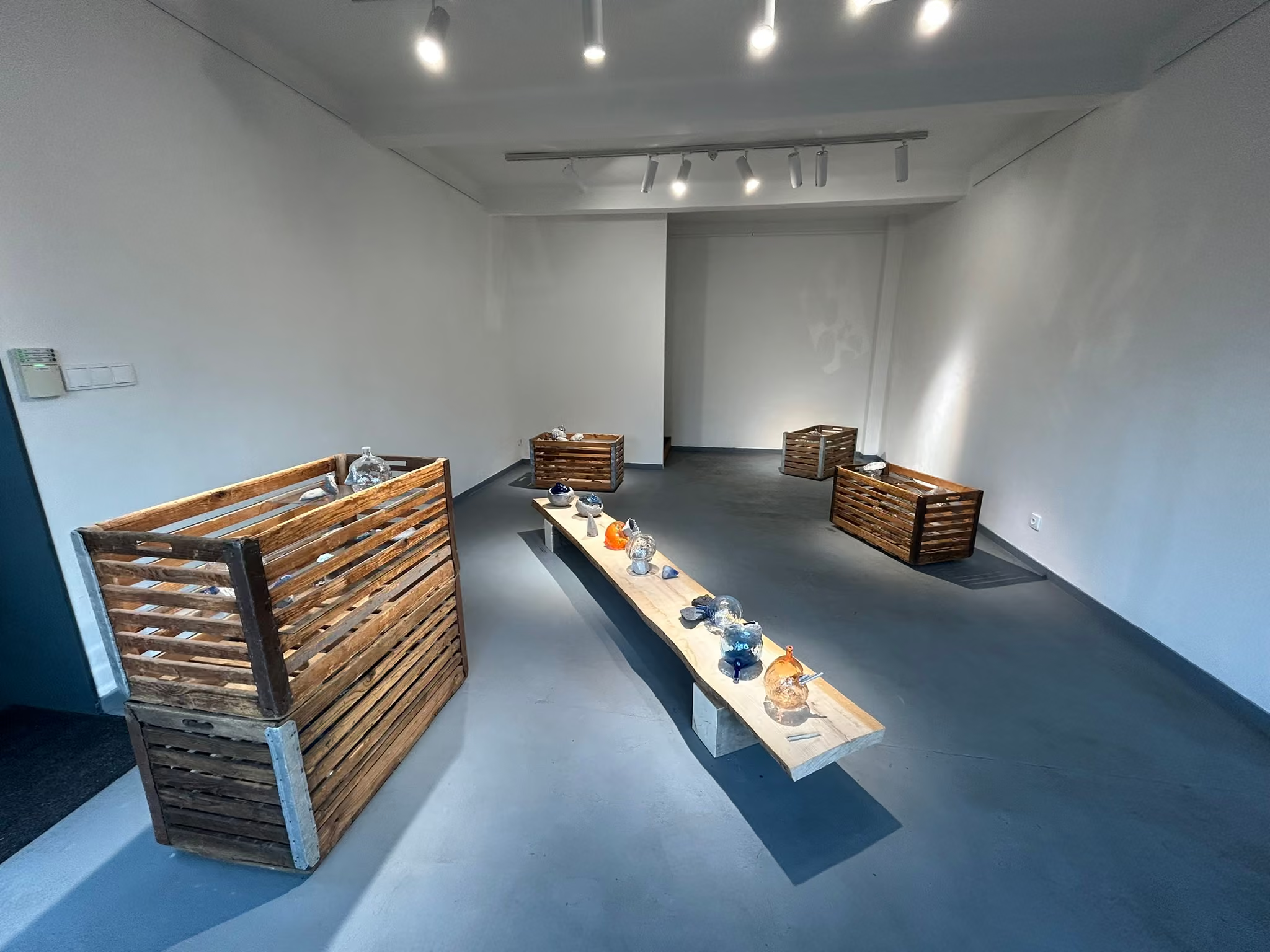
Barbora Tydlitátová is an artist who largely works in and around the northern Bohemian town of Železný Brod. In recent years, she has intensively focused on the relationships between regionally located “precious stones” – in this case glass-related relics – along with the landscapes that surround them. Inspiration in this respect also comes by way of a number of present-day philosophically oriented cultural scientists, geologists and even physicists, who harnessing the experiences of today into useful prognostications about tomorrow’s world. Tydlitátová is fascinated by materials with deep roots in the culture of glassmaking. This led the artist, for example, to explore the ultimate fate of glassmaking by-products (waste). For Tydlitátová, coloured shards of glass, which remain in the landscape for generations, represent both a footprint from the past as well as calling card for the future. What will such artefacts say about us? What stories will they tell?
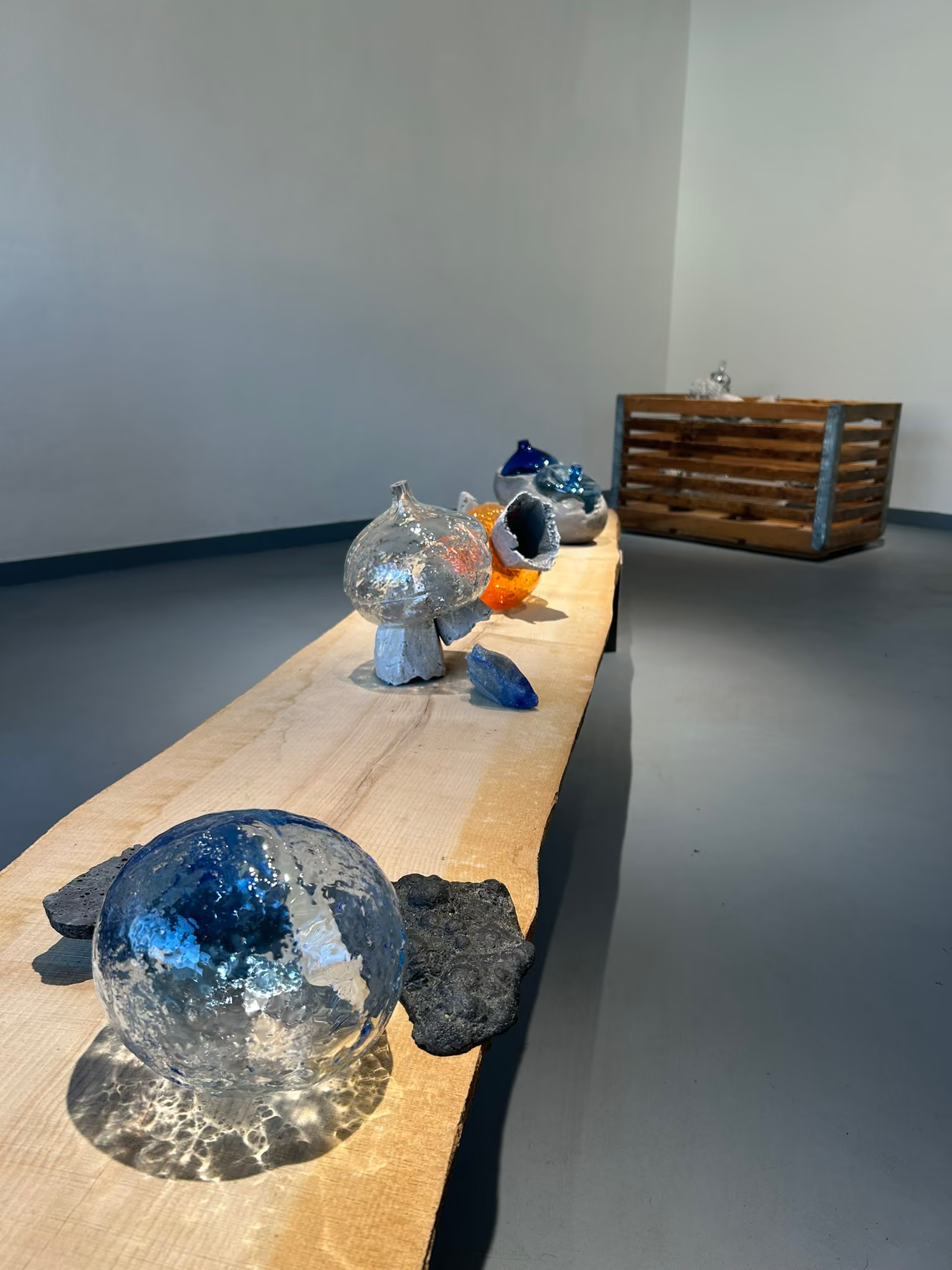
The artist’s works, created from such coloured glass shards, serve to tell a story irrespective of any claims to functionality. They evolve, transform, and interact with other entities; and they can collaborate, or, conversely, engage in destructive confrontations. Tydlitátová’s glass containers, meanwhile, conceal a certain hidden potential. In this sense, the works become “jewels of the future” – objects on the threshold of art, nature and history that carry the legacy of waste transformed into something of aesthetic value. These works also loosely tie in to one of the artist’s previous projects, Horniny budoucnosti (Glassglomerate), in which Tydlitátová created works from a mixture of materials and glass relics found out in the natural landscape. Each such resulting “rock” contained a copper tag featuring an embossed Instagram address by way of a description. Some objects are even returned to the landscape by the artist, so that they can “find their own path” and thus once again becoming part of the natural cycle.
The technology utilised by Barbora Tydlitátová to create her “precious stones” is based on the principle of the so-called sintering of glass powder. The process enables the transformation of coloured glass by-products into almost homogeneous materials resembling minerals. As much as possible, the artist avoids the use of plaster moulds, which would merely end up generating more waste. Instead, she pushes the limits of what is possible with “glass dough” – with precious stones emerging from materials that would otherwise end up as waste. Moreover, Tydlitátová’s blown glass vessels, often bearing traces of clay, serve as symbols of humankind’s integration with the natural world.
Barbora Tydlitátová’s creations are an example of a sustainable approach to materials and art, while also allowing the creation of new and unique artworks. The results are original objects that not only integrate past and present, but also express a relationship between materials, landscape and humankind. Each stone and each vessel is an entirely one-of-a-kind piece, which tells a story about its respective journey through time and space.
The Trash Gems exhibition is designed to inspire reflection on how humankind’s activities will be reflected in the geological and cultural layers of our future Earth. In other words’ today’s waste could be tomorrow’s treasure – both in an aesthetic and symbolic sense.



Technologie, kterou Barbora používá k vytvoření „drahokamů“, je založena na tzv. sintrování – spékání skleněné moučky. Tento proces umožňuje proměnu barevného sklářského odpadu v téměř homogenní materiály připomínající minerály. Barbora se vědomě co nejvíce snaží vyhýbat používání sádrových forem, které by generovaly další odpad, a místo toho pracuje s limity skelného těsta – drahokamy vznikají z materiálů, které by jinak skončily jako odpad. Foukané skleněné nádoby, často nesoucí stopy hlíny, se stávají symbolem spojení člověka s krajinou.
Barbořina tvorba je příkladem udržitelného přístupu k materiálu i umění a zároveň jí umožňuje vytvořit něco nového a vzácného. Výsledkem jsou originální díla, která nejen že propojují minulost a budoucnost, ale zároveň vyjadřují vztah mezi materiálem, krajinou a člověkem. Každý kámen a každá nádoba jsou jedinečným objektem, vyprávějícím příběh o své cestě časem a prostorem.
Výstava Trash Gems je tak pozvánkou k zamyšlení nad tím, jak se naše současná činnost odrazí v budoucích geologických i kulturních vrstvách Země. Co je dnes vnímáno jako odpad, se může stát pokladem zítřka – jak po stránce estetické, tak symbolické.
Inka Ličková, kurátorka výstavy