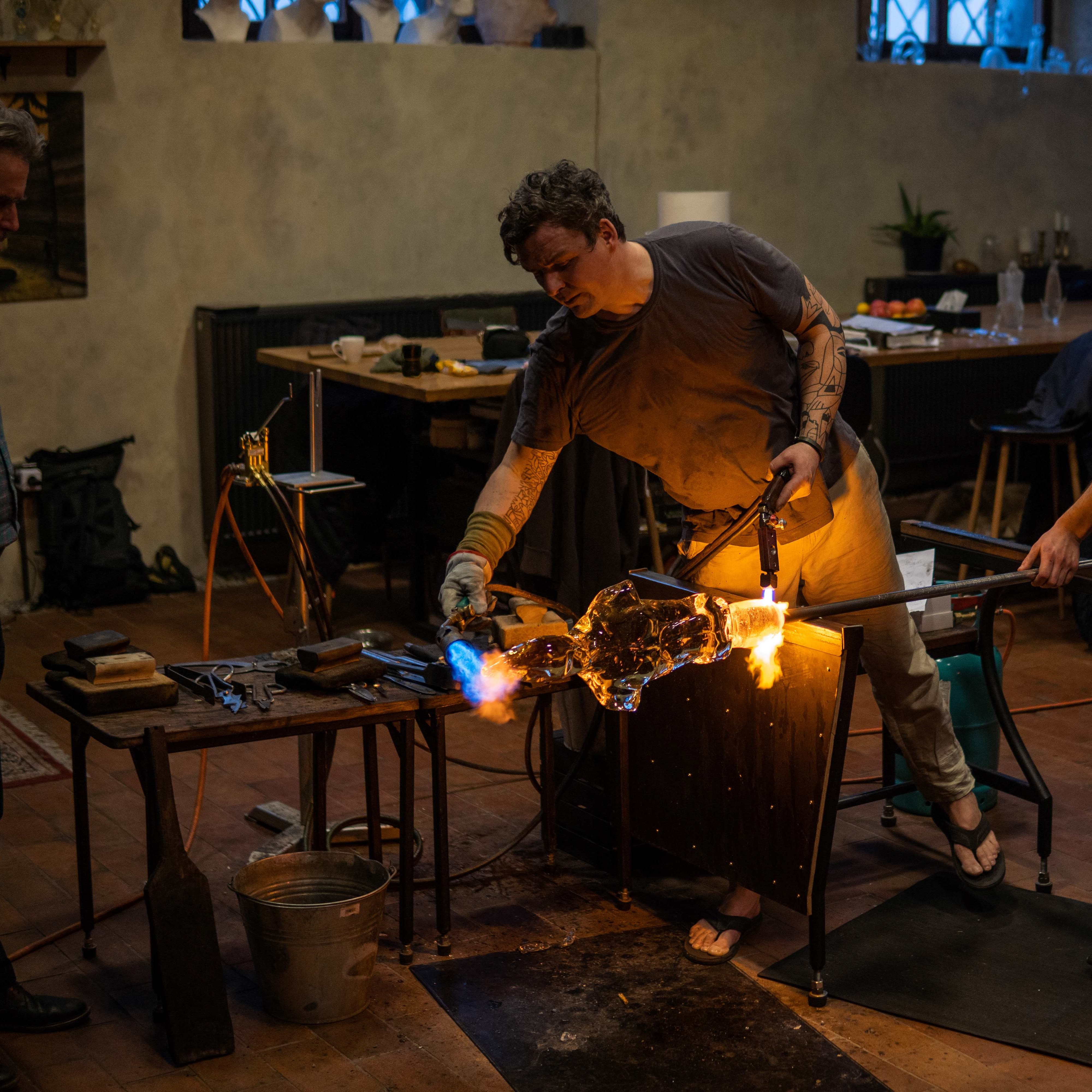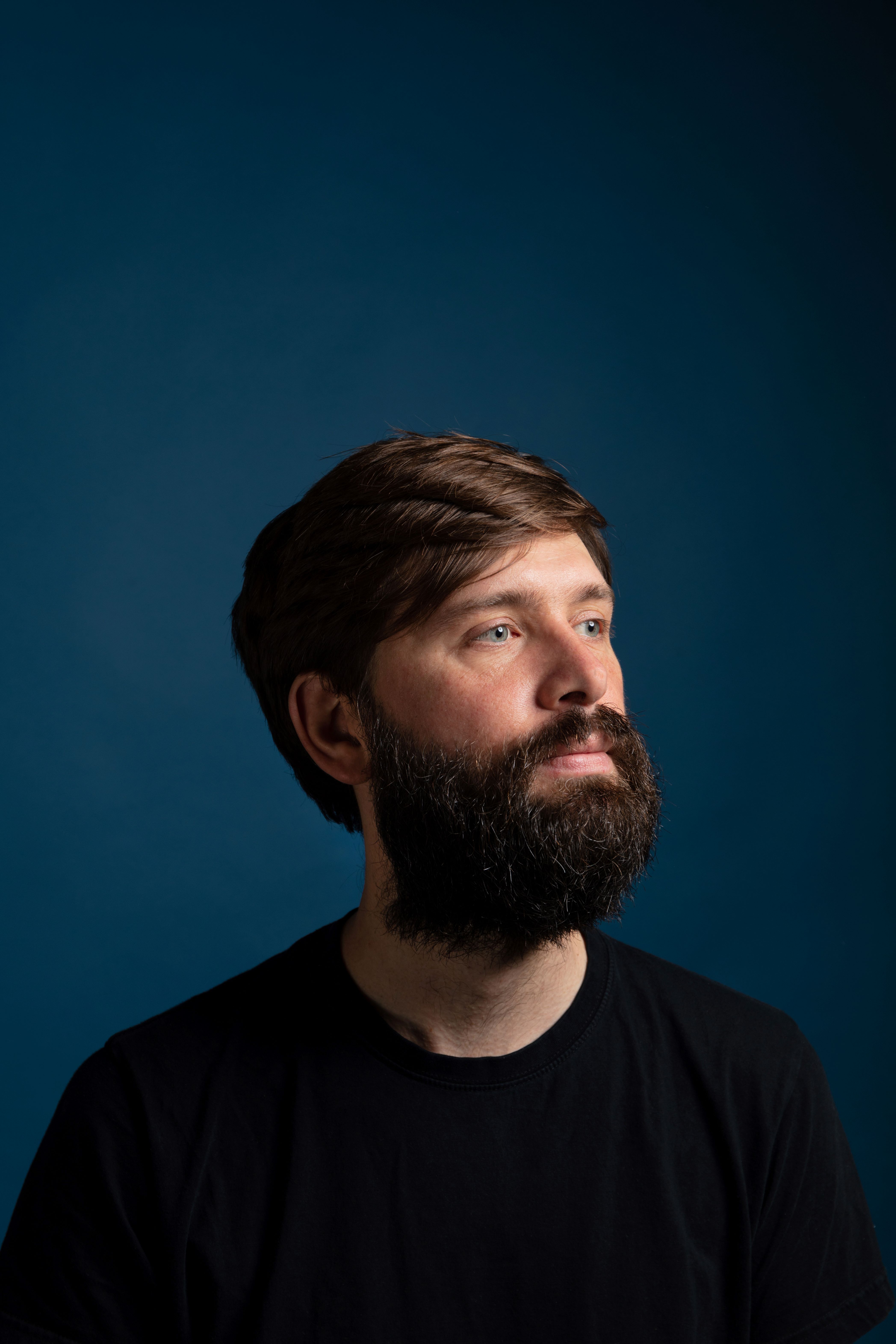
David Valner (born 1990) is a representative of the current generation of Czech glass artists and designers who naturally blend traditional craftsmanship with a distinct contemporary visual language. His work is primarily rooted in direct contact with the material and the possibilities offered by hand-shaping glass. In addition to his own artistic practice, he leads David Valner Studio, which produces collections of functional glass objects, lighting, and standalone pieces. He is also active at the family-run Valner Glass studio, where he has long collaborated with artists and designers from around the world.
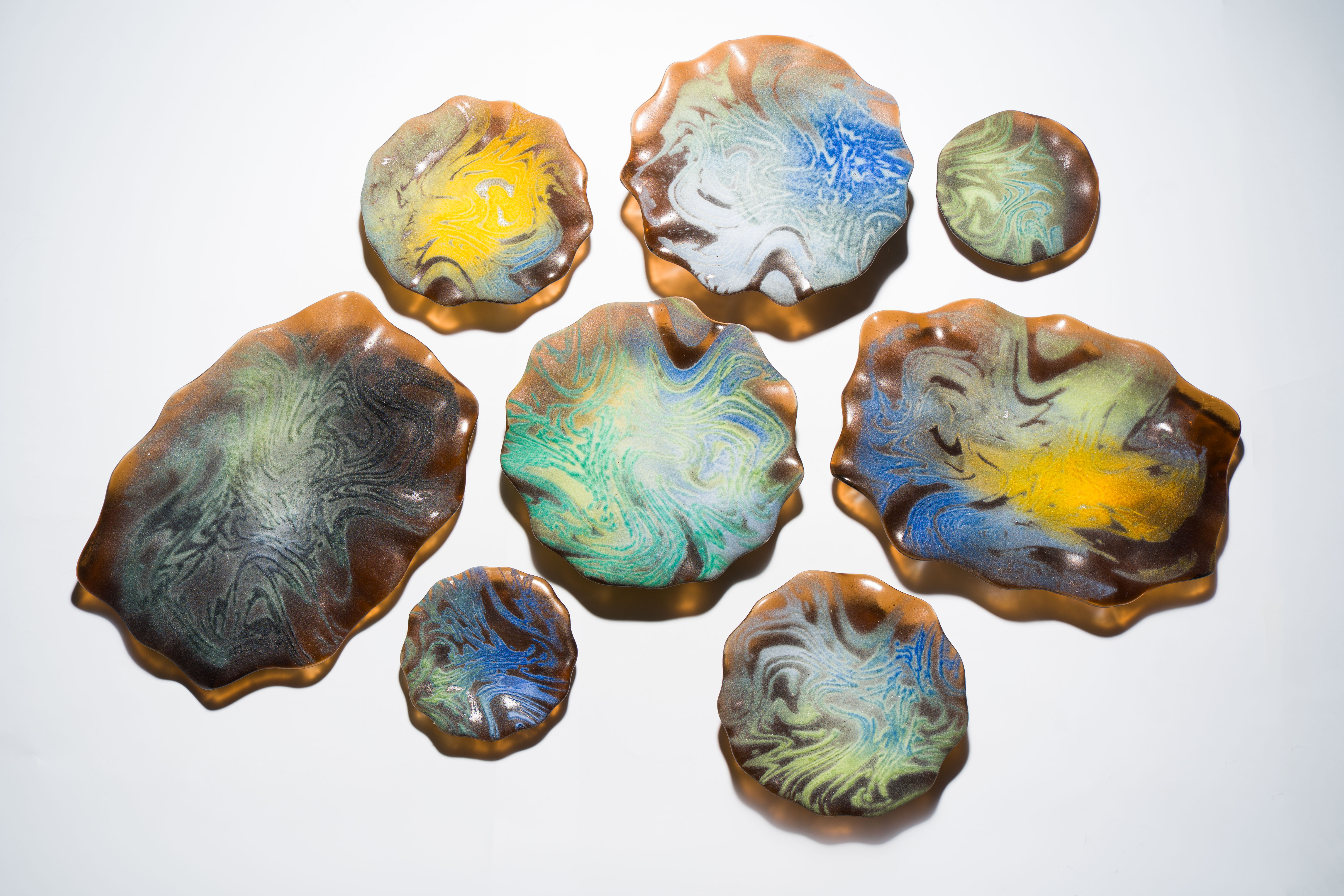
Valner’s work is characterized by his engagement with the natural behavior of glass—its fluidity, randomness, and variability. Rather than forcing the material into a predetermined shape, he leverages its inherent physical properties, leaving space for the process, chance, and the moment itself. This tension between control and spontaneity is a core principle of his practice. In his hands, glass is not merely a vessel for a final form, but an active medium that imbues every object with a trace of the process and a degree of unpredictability. In his collections, David Valner moves at the intersection of object design and fine art. He frequently works with organic structures and shapes inspired by natural processes, such as growth, decay, or the interweaving of materials. Series like Fungus, Recovered, and Parasitica demonstrate various facets of this approach, ranging from abstracted organic forms to objects where glass meets other materials, such as bronze. The result is a collection of pieces that maintain their functional logic while standing as independent sculptural works.
David Valner presents his work at major exhibitions and showcases both in the Czech Republic and abroad. In 2026, his work was featured during Milan Design Week as part of the OFF-GRID Collective, at exhibitions by the American gallery The Future Perfect, in Copenhagen during 3daysofdesign, and through collaborations with interior designers and architects. His work naturally transcends the boundaries between contemporary glass art, collectible design, and architecture, demonstrating the potential of glass as a living, contemporary, and ever-evolving medium.
Designblok 2026
Michaela Spružinová
Ivana Zuskinová
Ľudmila Žilková
David Valner
Irena Czepcová
Works