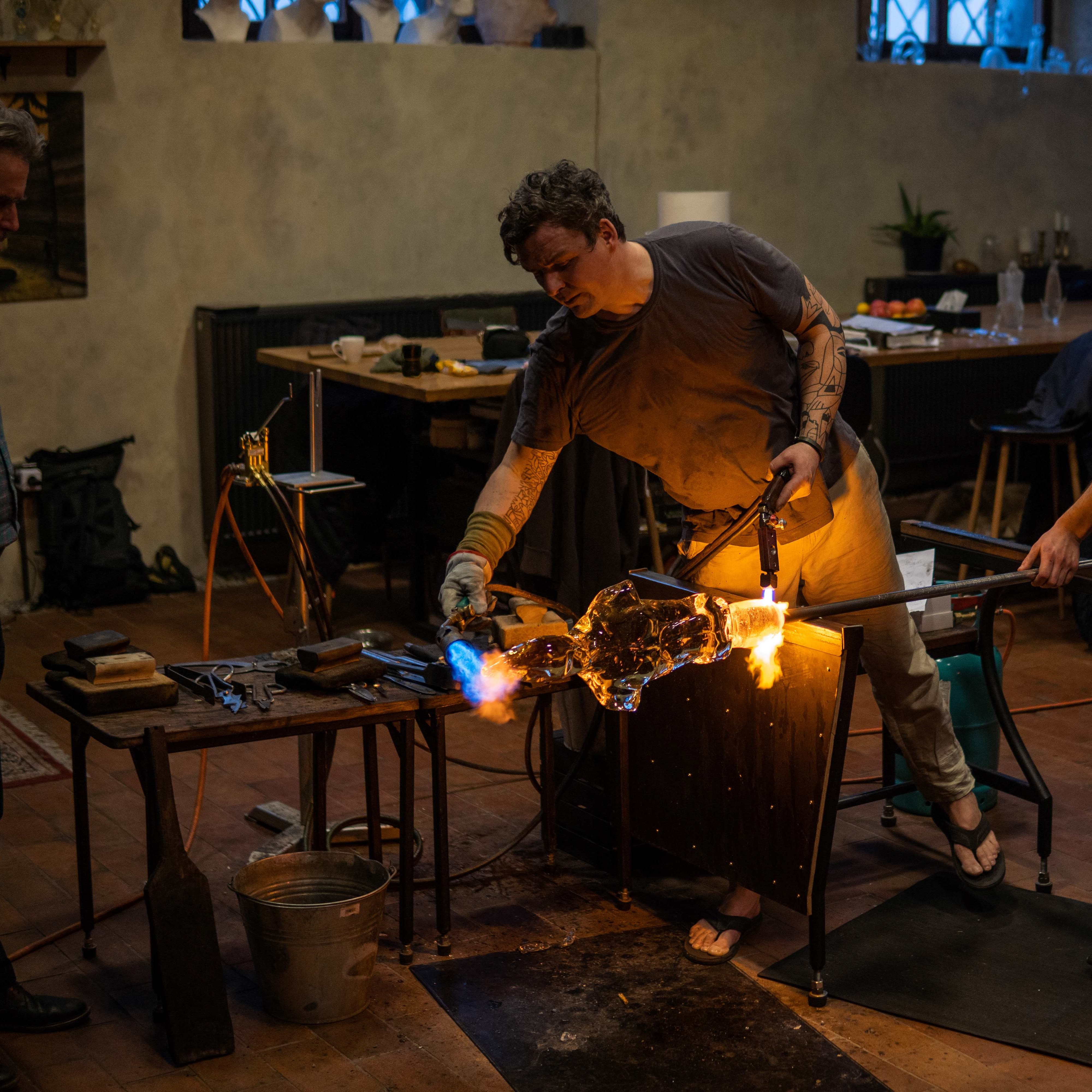
René Roubíček (1922–2018) was one of the most distinctive figures of 20th-century Czech glass – an artist who transformed glass into a medium of free, spontaneous gesture. Drawing inspiration from art and music during his studies at Prague's UMPRUM, he turned to hot-shaped glass, working much like a jazz improviser in dialogue with the glowing material and the master glassmakers. He became famous primarily for his monumental sculptures and light installations for prestigious exhibitions, such as the abstract sculpture for Expo 1958 in Brussels and the legendary “Columns” displayed in 1967 in Montreal. He collaborated for many years with glassworks in Nový Bor and Kamenický Šenov, as well as with companies like Moser, Preciosa, and Lasvit, significantly influencing several generations of glassmakers.
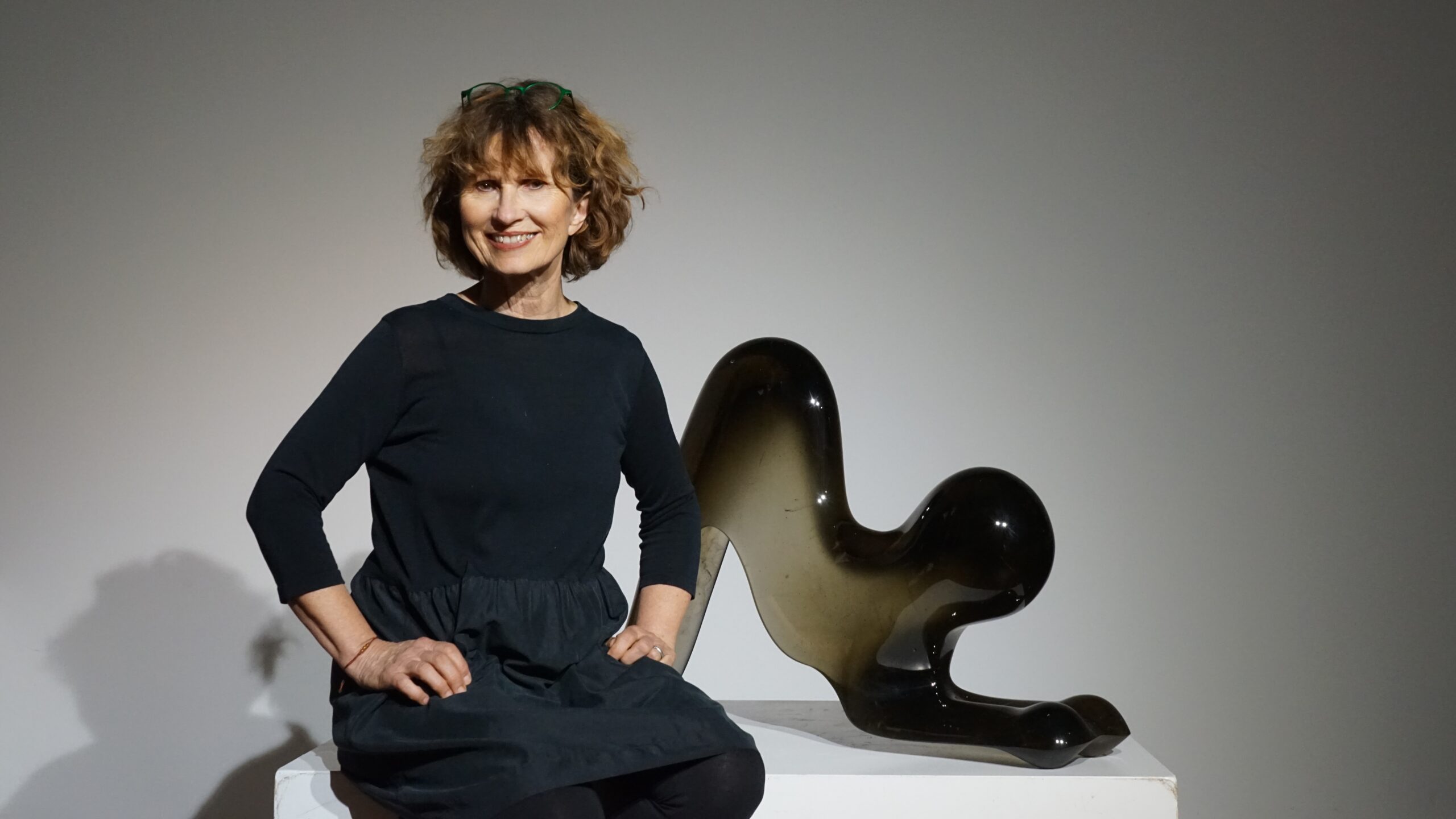
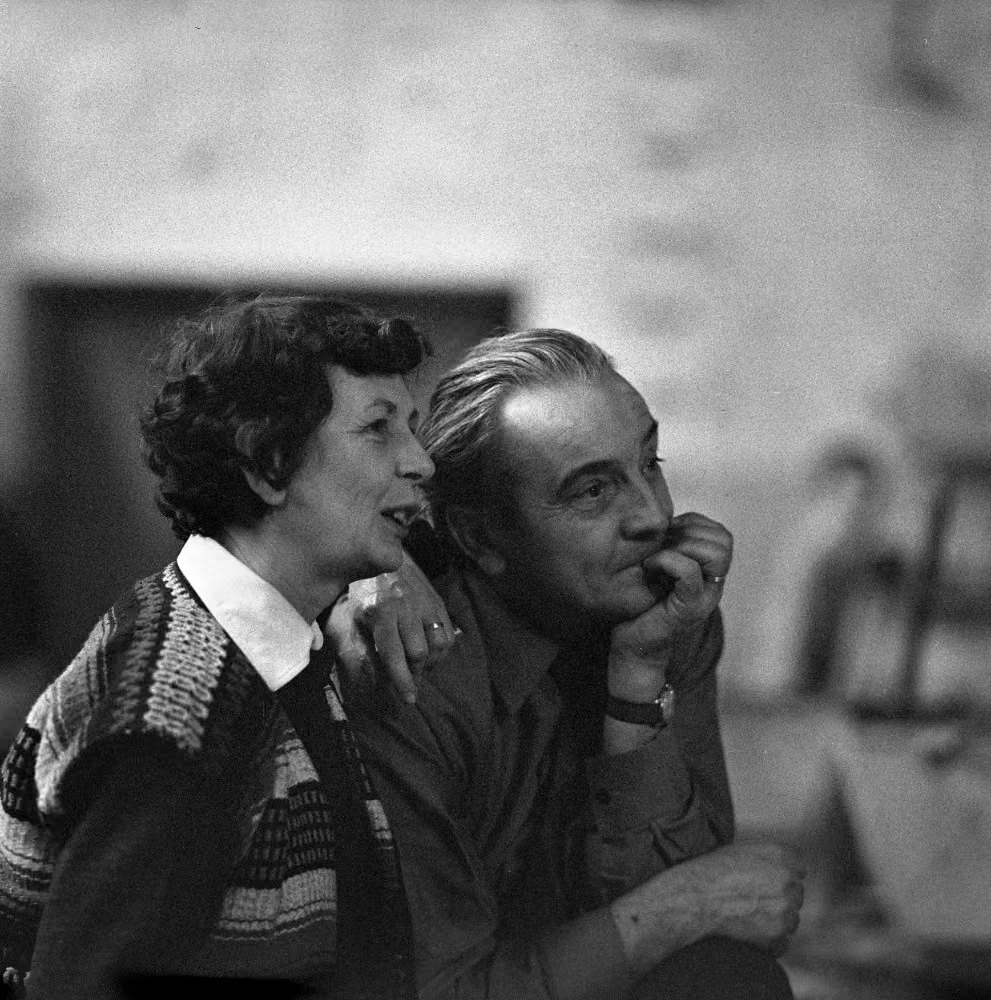
Together with his wife, the glass artist Miluše Roubíčková, he formed a respected duo present at all the key chapters of post-war Czech glass, regularly participating in world exhibitions. While Miluše developed her poetic world of flowers, objects, and playful still lifes, Roubíček returned to dynamic sculptures, cycles of heads and figures, and his late female busts – “Beautiful Ladies” and “Afterky,” full of humor and detachment. Their joint work, scattered across Czech and international collections, embodies to this day a “joy of life” and the courage to push glass beyond mere decoration into a fully-fledged sculptural medium.
Afterky a kytky
Miluše Roubíčková
René Roubíček
Works